Large Cohort Transcriptomics

Adelaide Biomed Seminar Series

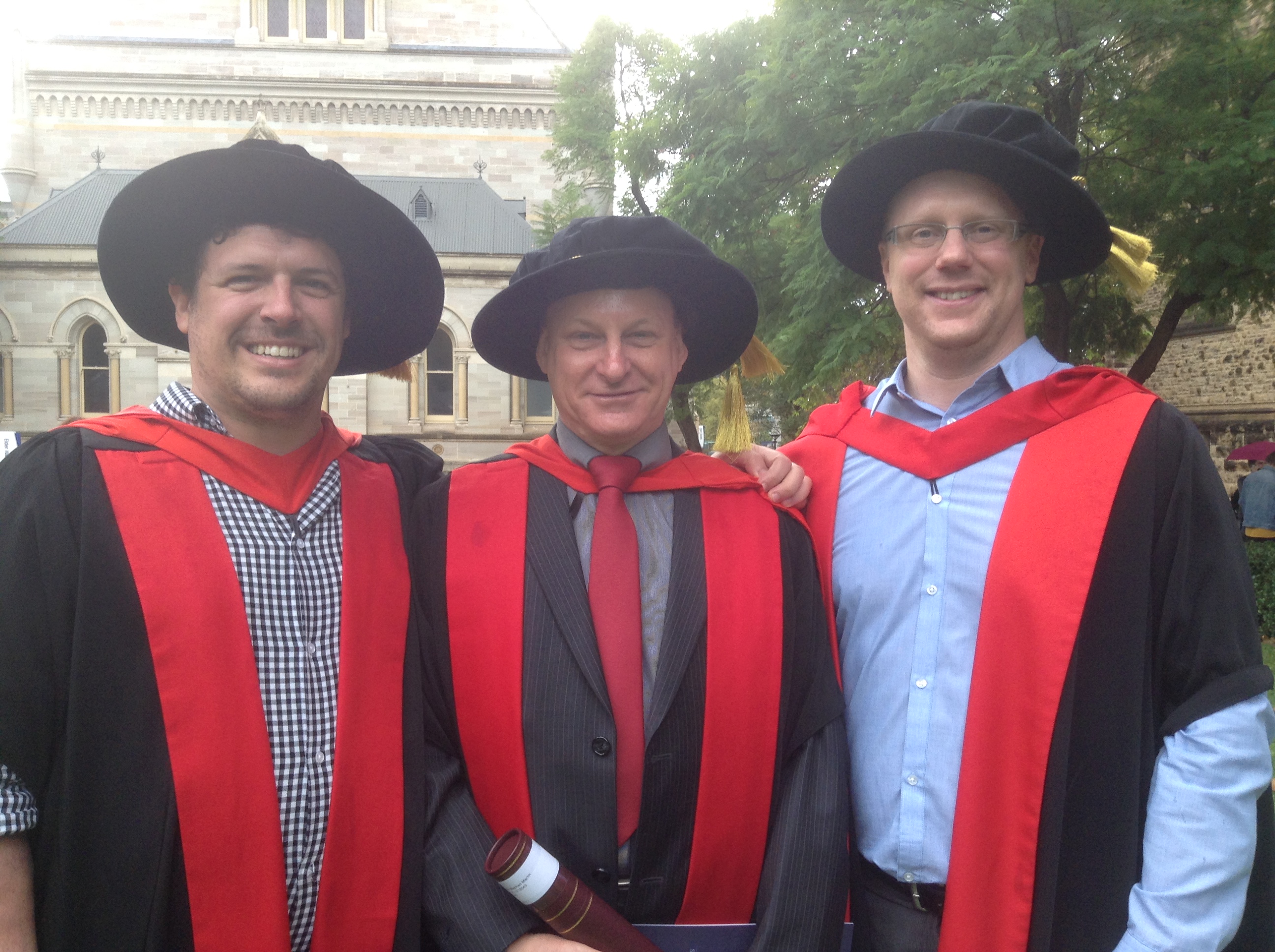
Dr Stevie Pederson (They/Them)
Black Ochre Data Labs
The Kids Research Institute Australia / ANU

March 13, 2026

Acknowledgement of Country
I would like to acknowledge that many of us are meeting today on Kaurna Country (Karrawirraparri: Redgum Forest River).

I acknowledge the deep feelings of attachment and relationship of the Kaurna people to their Place.

I also pay my respects to the cultural authority of Aboriginal and Torres Strait Islander peoples from other areas of Australia online today, and pay my respects to Elders past, present and emerging.

About Me

  • Did 1st year science in 1986 \(\rightarrow\) completed 2002-2005 (Genetics)
    • BMa.Comp.Sc. (Hons) 2006-2007
    • 1988-1991: Elder Conservatorium
  • First came across R (1.5.1) analysing two-colour microarrays in Dec 2002
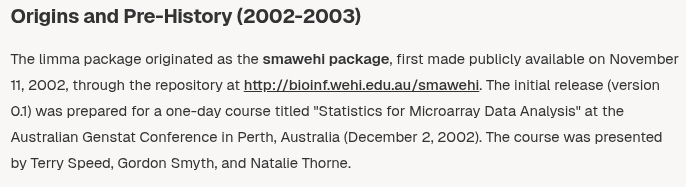
https://deepwiki.com/cran/limma/1.1-package-history-and-evolution

About Me

  • PhD 2008-2018
    • Normal student: 2008-2011
    • Homeless/Couch-surfing: 2012-2013
    • Bioinformatics Hub: 2014-2020
  • 2020-2022: Dame Roma Mitchell Cancer Research Labs
  • 2022-2026: Black Ochre Data Labs

Bioconductor Enthusiast



  • Also developed & maintain strandcheckR (Hien To)
    • Helped with sSNAPPY (Nora Liu) + tadar (Lachlan Baer)
  • Currently co-chair of Community Advisory Board
    • Leading BiocAsia Working Group

The PROPHECY Study
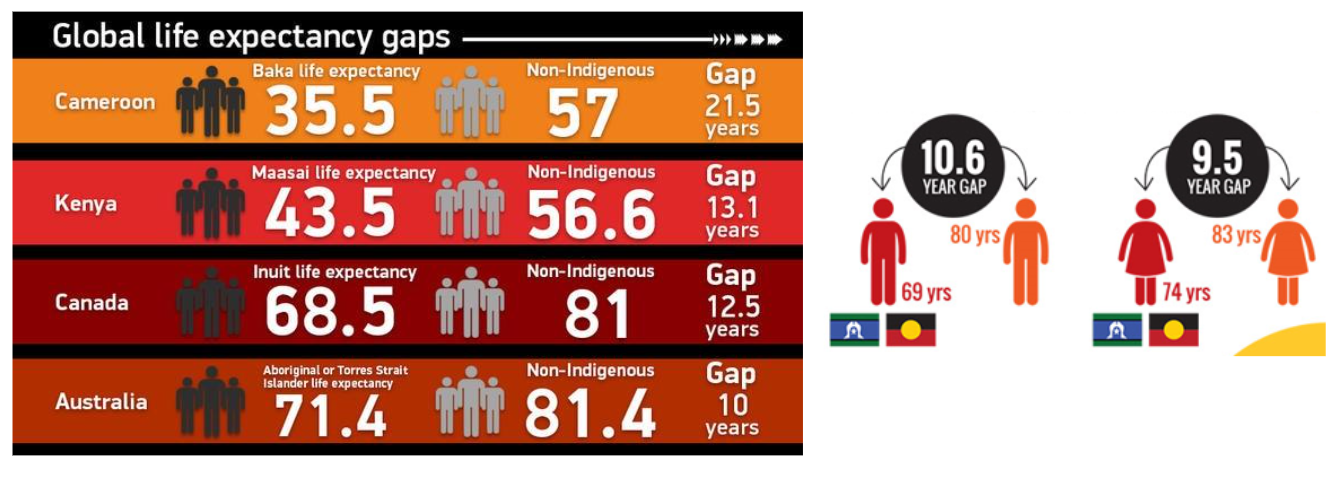
The PROPHECY Study
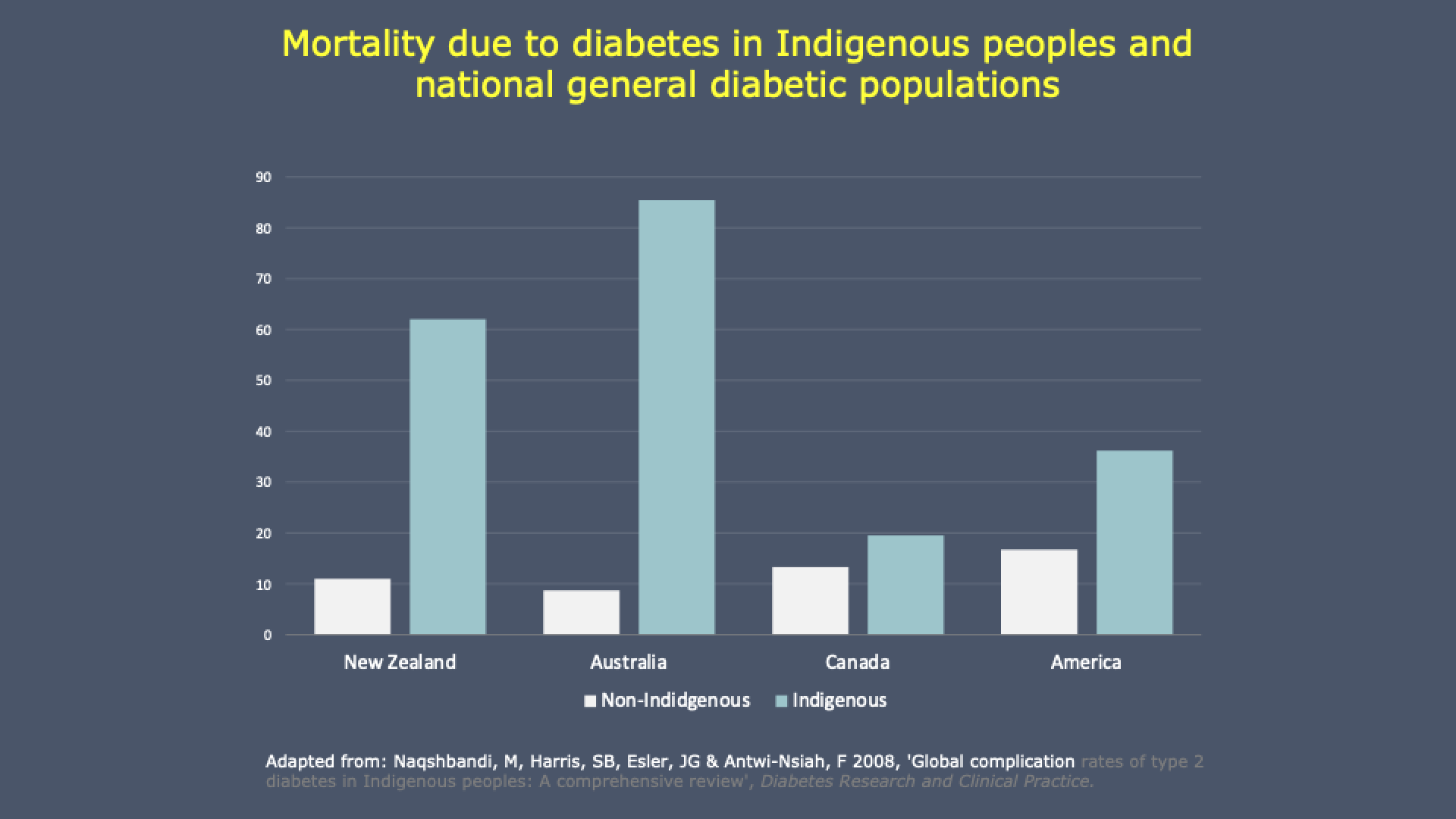
The PROPHECY Study
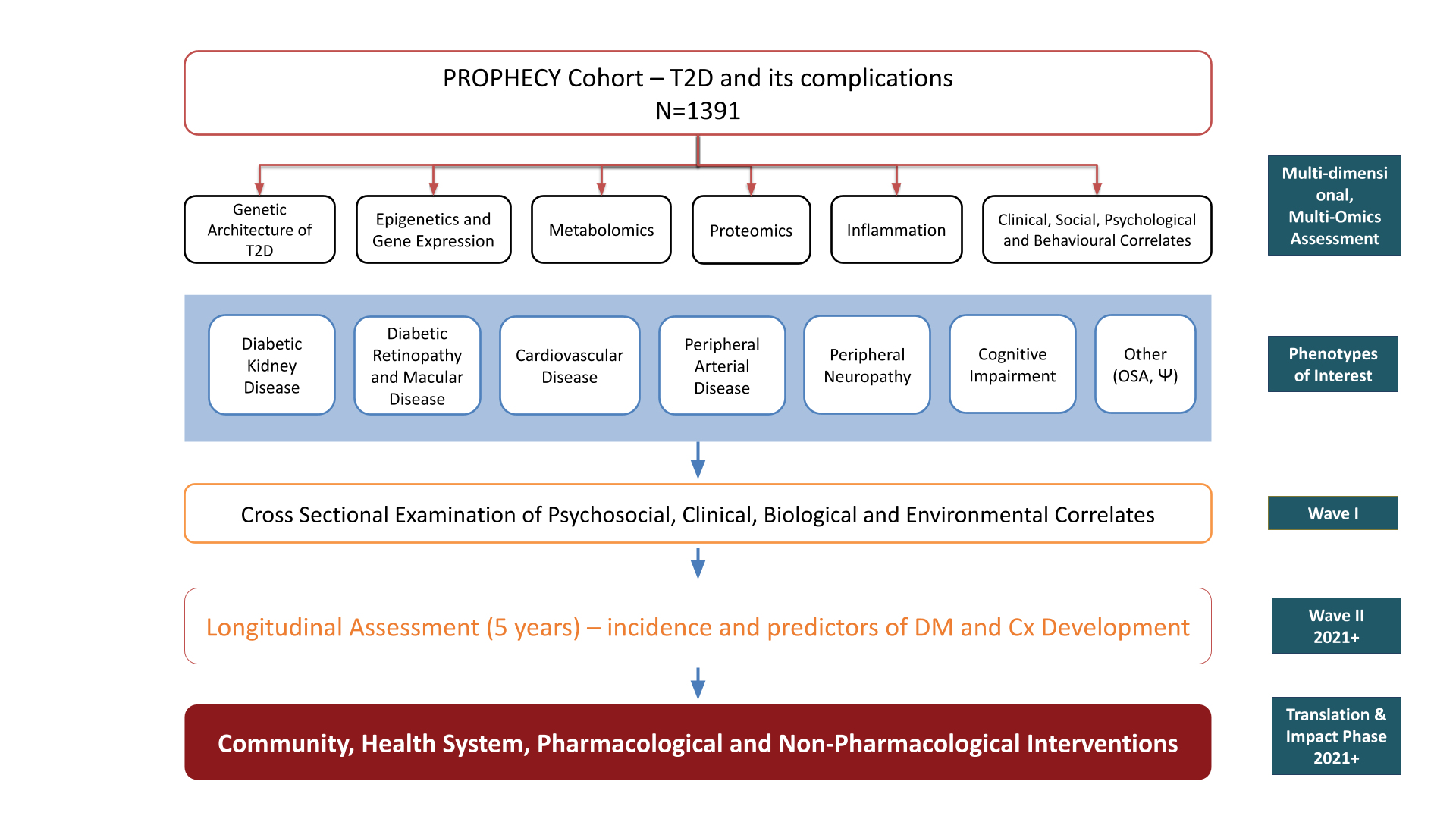
The PROPHECY Study

The PROPHECY Study

  • A key design element \(\rightarrow\) all research is community led, not researcher led
  • Prof Alex Brown spent 5 years consulting with SA communities first
  • Strong Indigenous Data Sovereignty Principles
  • Strict data management protocols
    • High demand for clear documentation

Clickbait Time

Is large cohort transcriptomics just scRNA without the zero counts?

Stevie speaks the truth

The PROPHECY Transcriptomics Layer

Sequencing Considerations

  • Whole Blood from participants \(\implies\) incredibly valuable resource
  • Trying to to get everything as ‘right’ as possible \(\implies\) no second chances
  • 13x96 well plates were planned for & paid before I joined \(\implies\) N = 1248
  • Subset of 93 participants already sequenced by the El Osta group
    • Focus on Chronic Kidney Disease (CKD) + Diabetes (T2D)
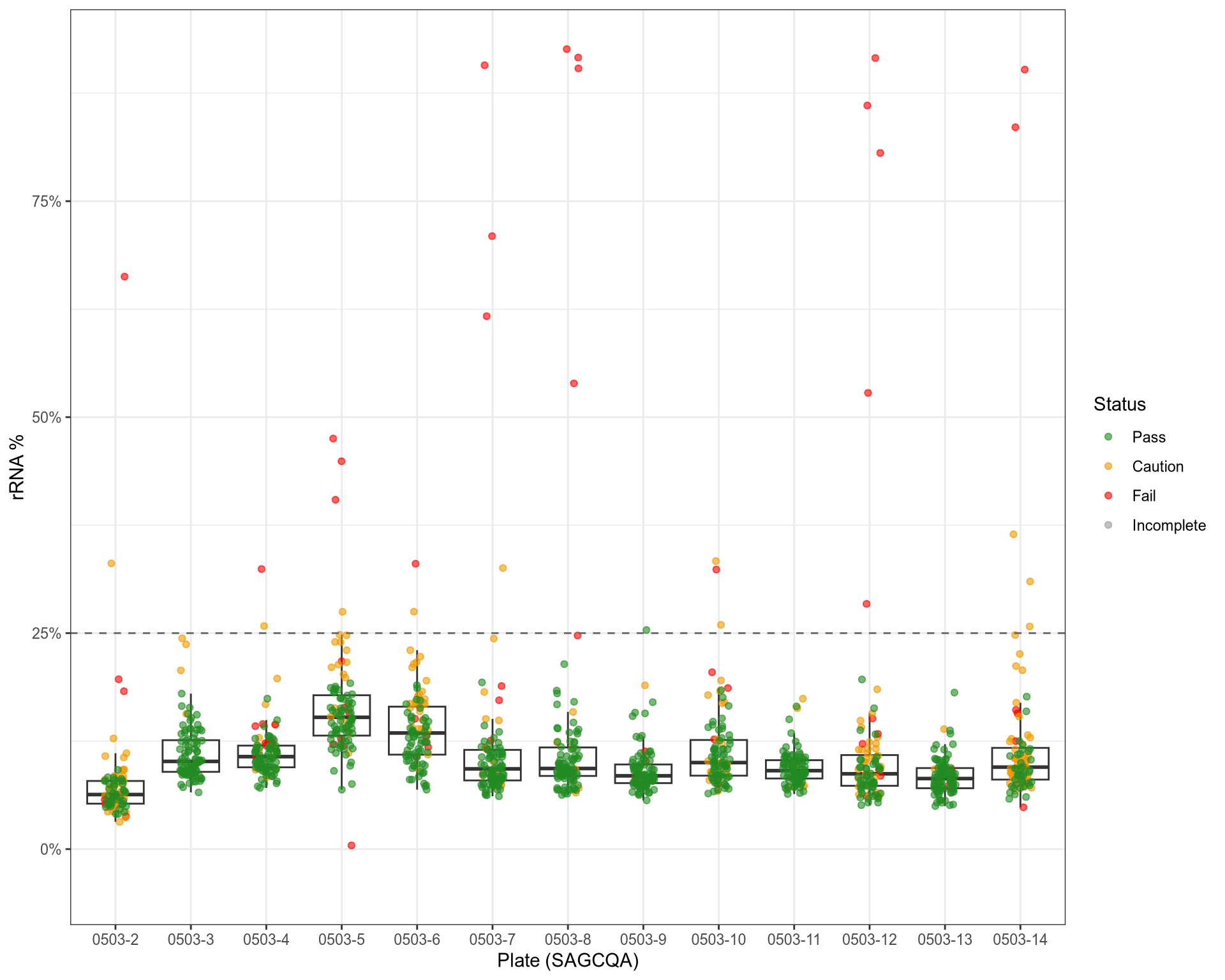
  • Total RNA \(\implies\) rRNA Depleted but not hbRNA depleted
    • hbRNA was 30-50% of library
    • rRNA consistently below 20% (mostly below 10%)
  • Pilot study compared polyA with totalRNA (rRNA + hbRNA depleted)

Study Design

  • Prepared in batches of 96 \(\implies\) batch effects
    • All reagents from same supplier batches
  • Chose a design strategy compatible with hRUV (Kim et al. 2021)
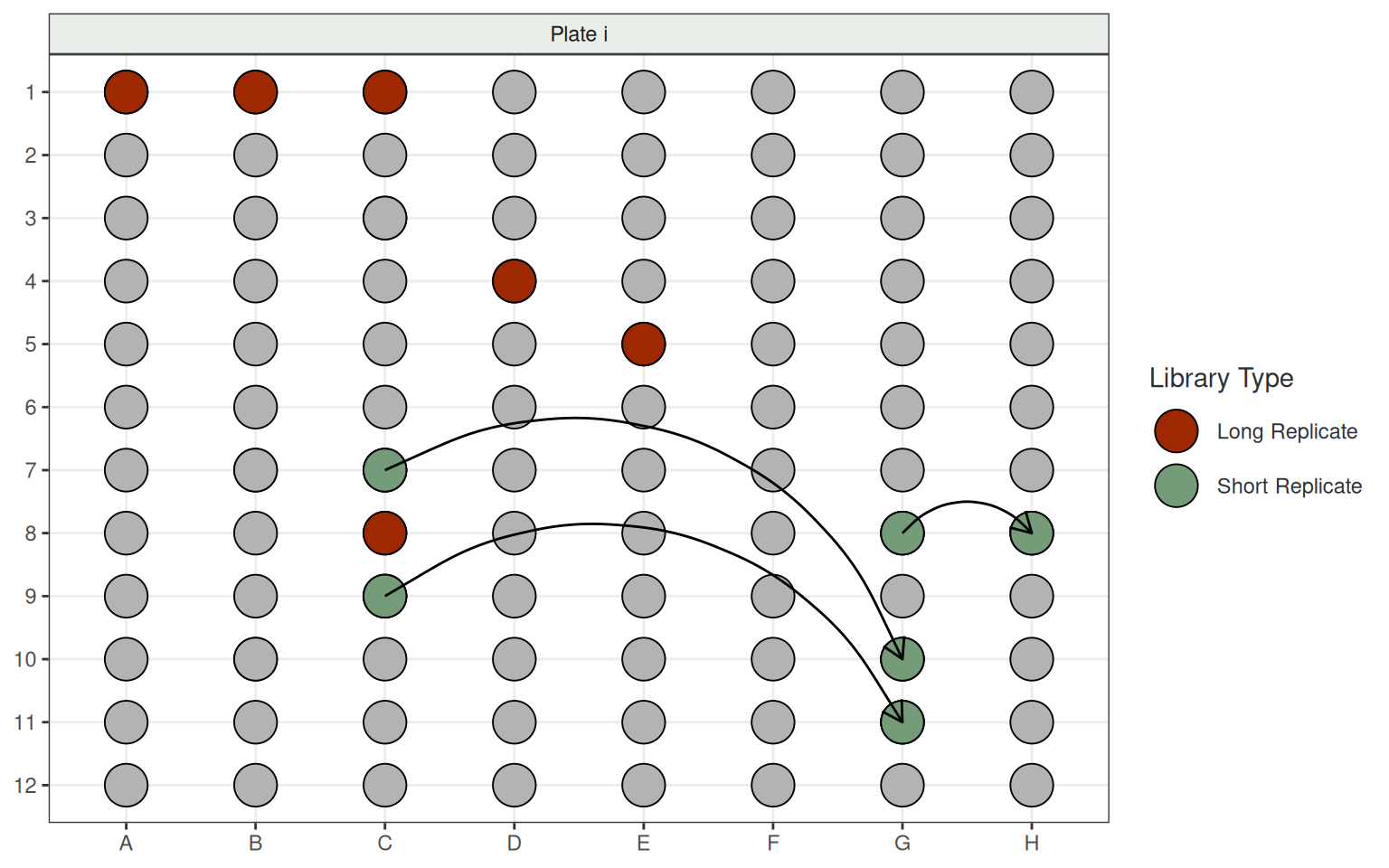
    • Short replicates, Long replicates, Pools
  • 1134 Blood samples were selected for inclusion based on:
    • RIN >5.0 & RNA concentration > 25ng/μl
  • Samples are stored in extraction order with a ULN
    • Randomising samples would be extremely difficult
    • Only had access to RIN, Concentration & Sex
    • El Osta sub-cohort were all late ULNs

Experimental Design

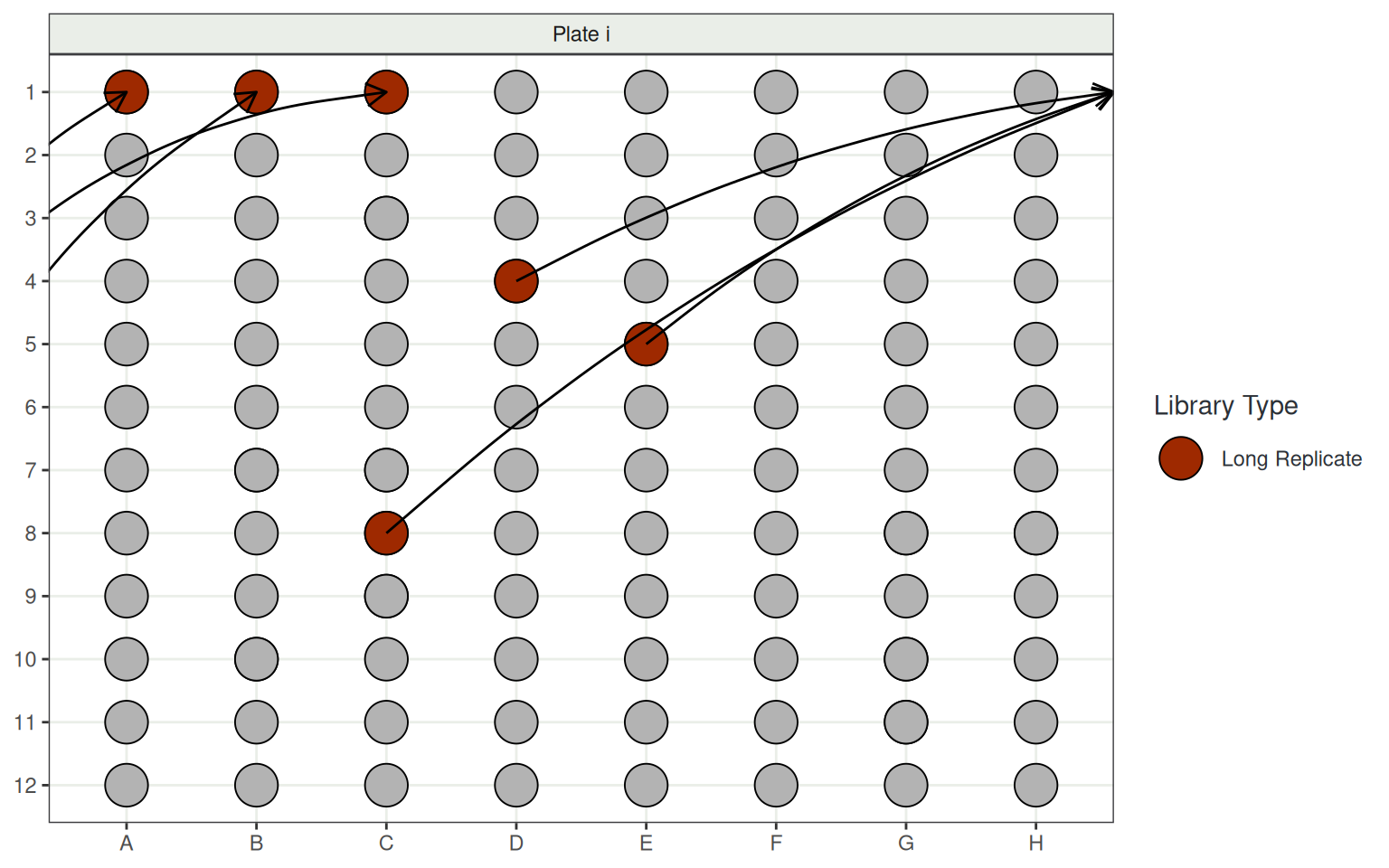
  • Plates include:
    • 6 Long Replicates to straddle consecutive plates

Trivia Time!!!

  • Did you know that plates are prepared using a multi-tip pipette?
  • Ordered by columns not rows

Experimental Design

  • Plates include:
    • 6 Long Replicates to straddle consecutive plates
    • 6 Short Replicates within plates

Experimental Design
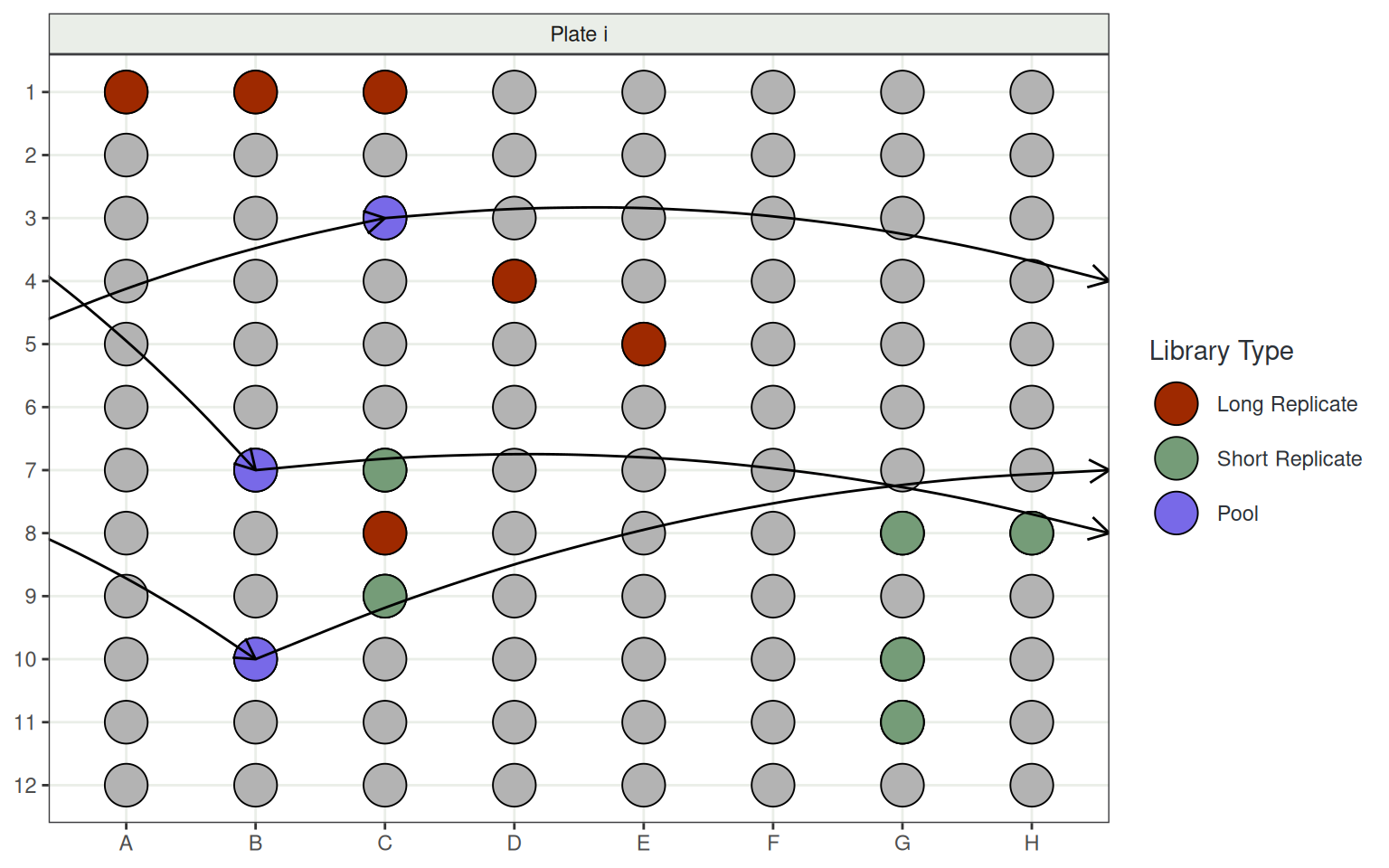
  • Plates include:
    • 6 Long Replicates to straddle consecutive plates
    • 6 Short Replicates within plates
    • 3 distinct pools across all 13 plates
    • 87 Participants \(\implies\) 1,134 total

Data Processing Workflow

  • Data processing written in nextflow
    • Dr Alastair Ludington & Holly Massacci
  • Run as every plate came in
  • Produced a set of plate-level QC reports
    • Threw everything at it: fastp, RSeQC, samtools stats, all log files etc
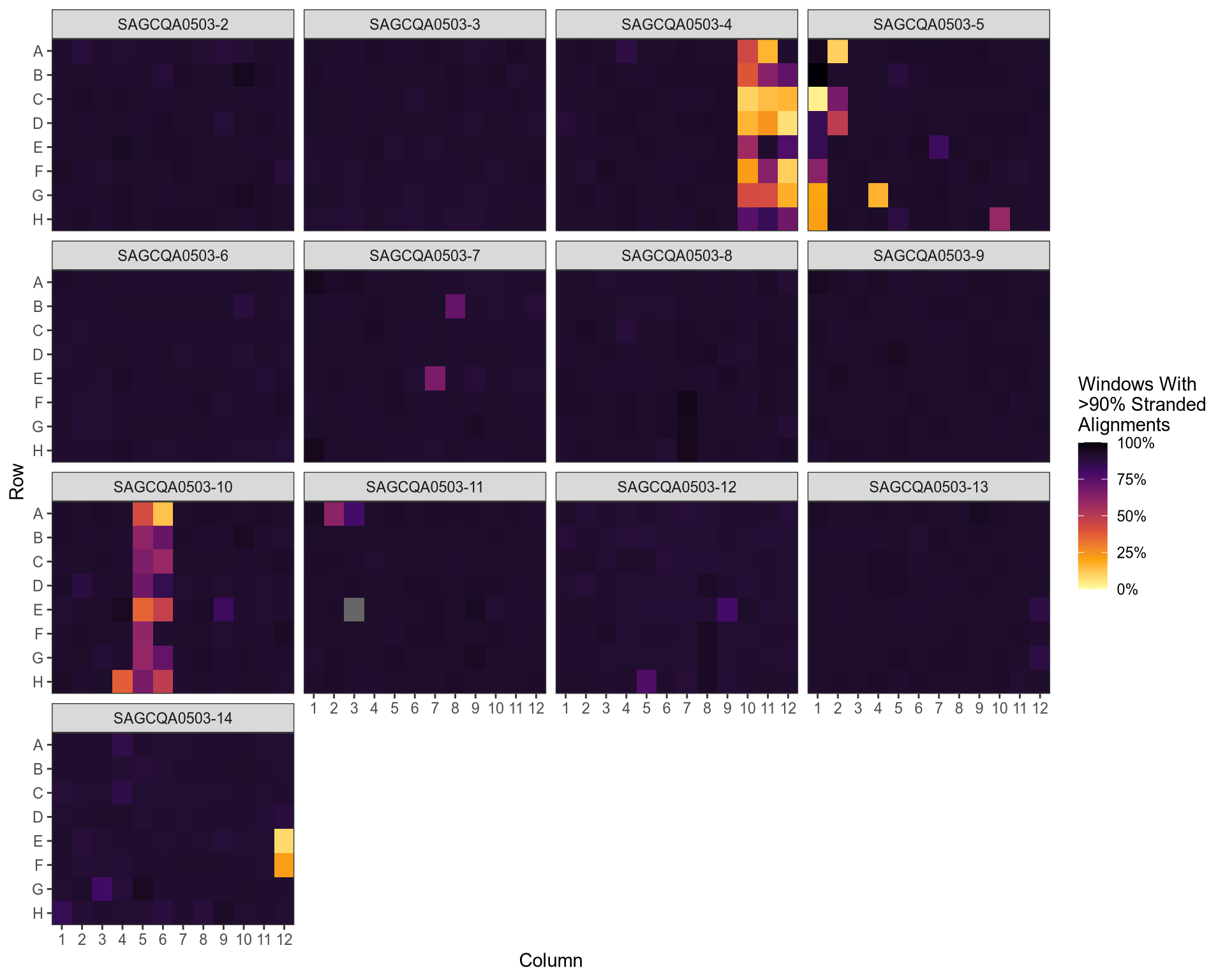
    • Forgot to include strandcheckR (To and Pederson 2019) \(\rightarrow\) supplementary pipeline
  • Manually checked every plate for Pass/Fail/Caution
    • Thinking about which libraries to resequence

Data Processing Workflow

Pipeline Output

/path/to/prophecy/PROP000000/ # PROPHECY ID
└── 1234567 # Aliquot ID
    └── RNASEQ
        ├── bigwigs
        │   └── E200099999 # Sequencing Run ID
        │       └── 23-00000 # ULN
        │           ├── GRCh38
        │           └── PROPHECY
        ├── depletion
        │   └── E200099999
        │       └── 23-00000
        │           ├── 1234567_1_hbrna.flagstat
        │           └── 1234567_1_rrna.flagstat
        ├── fastp
        │   └── E200099999
        │       └── 23-00000
        │           ├── 1234567_1_fastp.html
        │           └── 1234567_1_fastp.json
        ├── fastq
        │   └── E200099999
        │       └── 23-00000
        │           ├── 23-00000_1_S24_L01_R1_001.fastq.gz
        │           ├── 23-00000_1_S24_L01_R1_001.md5
        │           └── 23-00000_1_S24_L01_R2_001.fastq.gz
        ├── featureCounts
        │   └── E200099999
        │       └── 23-00000
        │           ├── GRCh38
        │           └── PROPHECY
        ├── rseqc
        │   └── E200099999
        │       └── 23-00000
        │           ├── GRCh38
        │           │   ├── inner_distance
        │           │   │   ├── 1234567_1.inner_distance_freq.txt
        │           │   │   ├── 1234567_1.inner_distance_mean.txt
        │           │   │   └── 1234567_1.inner_distance.txt
        │           │   ├── read_distribution
        │           │   │   └── 1234567_1.read_distribution.tsv
        │           │   └── tin
        │           │       ├── 1234567_1.summary.txt
        │           │       └── 1234567_1.tin.tsv
        │           └── PROPHECY
        ├── salmon
        │   └── E200099999
        │       └── 23-00000
        │           ├── GRCh38
        │           │   └── 1234567_1
        │           │       ├── aux_info
        │           │       ├── cmd_info.json
        │           │       ├── lib_format_counts.json
        │           │       ├── libParams
        │           │       ├── logs
        │           │       └── quant.sf        
        │           └── PROPHECY
        └── star
            └── E200099999
                └── 23-00000
                    ├── GRCh38
                    │   ├── 1234567_1.cram
                    │   ├── 1234567_1.cram.crai
                    │   ├── 1234567_1.cram.md5
                    │   ├── 1234567_1.Log.final.out
                    │   ├── 1234567_1.SJ.out.tab
                    │   ├── 1234567_1.stats
                    │   └── 1234567_1_strandcheckr.tsv.gz                    
                    └── PROPHECY
  • For all 1248 libraries (including 1 repeated run …)

Final Outcome

  • 31 sample mixups \(\implies\) all resolved successfully
    • Only one library was an unexpected participant
    • 17 had no genotypes \(\implies\) assumed correct
  • 1 library broke STARconsensus
    • DUG team identified bug in STAR & made pull request
  • Re-integrating mixups was non-trivial
    • QC reports written for 96 samples failed
    • Manual re-collation of all QC outputs

Final Summary

Plate Pass Caution Fail Incomplete Total Yield (billions) Mean Q30
SAGCQA0503-2 40 47 9 0 6.26 94.8%
SAGCQA0503-3 92 4 0 0 6.36 95.2%
SAGCQA0503-4 70 15 11 0 6.14 94.4%
SAGCQA0503-5 68 18 10 0 6.24 94.2%
SAGCQA0503-6 62 28 6 0 6.31 94.7%
SAGCQA0503-7 77 11 8 0 5.94 94.2%
SAGCQA0503-8 85 6 5 0 5.51 92.4%
SAGCQA0503-9 92 1 3 0 5.81 93.1%
SAGCQA0503-10 68 22 6 0 5.69 93.3%
SAGCQA0503-11 88 7 0 1 4.89 91.4%
SAGCQA0503-12 49 36 11 0 5.83 93.9%
SAGCQA0503-13 90 3 3 0 5.21 92.8%
SAGCQA0503-14 38 52 6 0 6.31 94.7%
Total 919 250 78 1

QC

Name Source Interpretation
status Manual Inspection Originally defined in order to identify libraries which might be candidates for resequencing
rin SAGC RNA Integrity Number with high values (> 7) indicating a higher quality sample
conc SAGC RNA Concentration in the original extractions
depletion_conc SAGC RNA Concentration used for the rRNA/hbRNA deletion step. Two values were used with the lower concentration being an attempt to reduce saturation of the depletion reagents
rrna_rate BODL pipeline Estimates the proportion of reads deriving from rRNA by aligning a subset of reads to an rRNA reference
hbrna_rate BODL pipeline Estimates the proportion of reads deriving from hbRNA by aligning a subset of reads to an rRNA reference
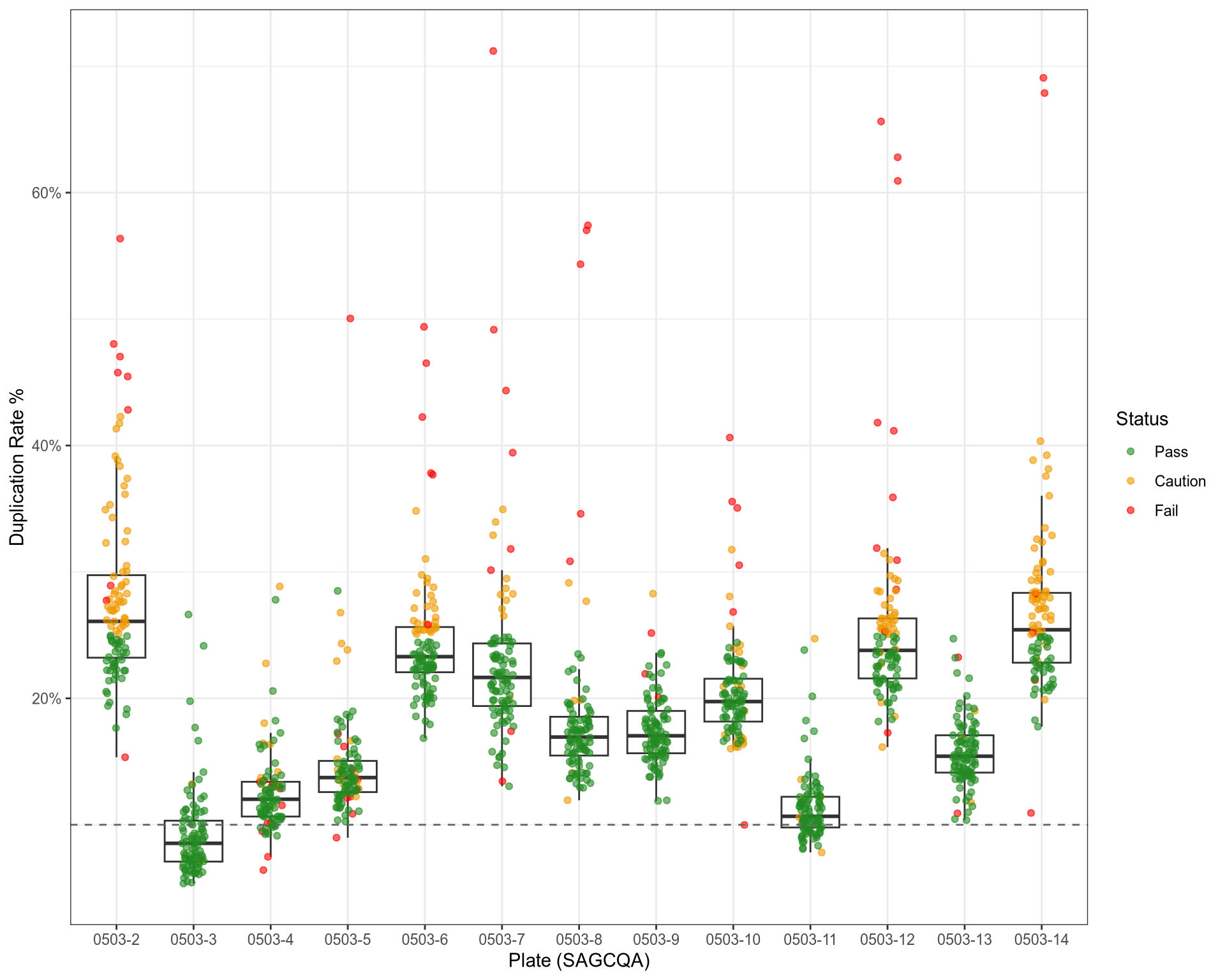
duplication_rate fastp Taken directly from the fastp reports, given that UMIs were included in all libraries
sequenced_fragments fastp The initial number of fragments contained in each pair of fastq files
q30_rate fastp The proportion of bases acheiving a PHRED quality score > 30 when being sequenced
gc_content fastp The average GC content of reads across the entire library
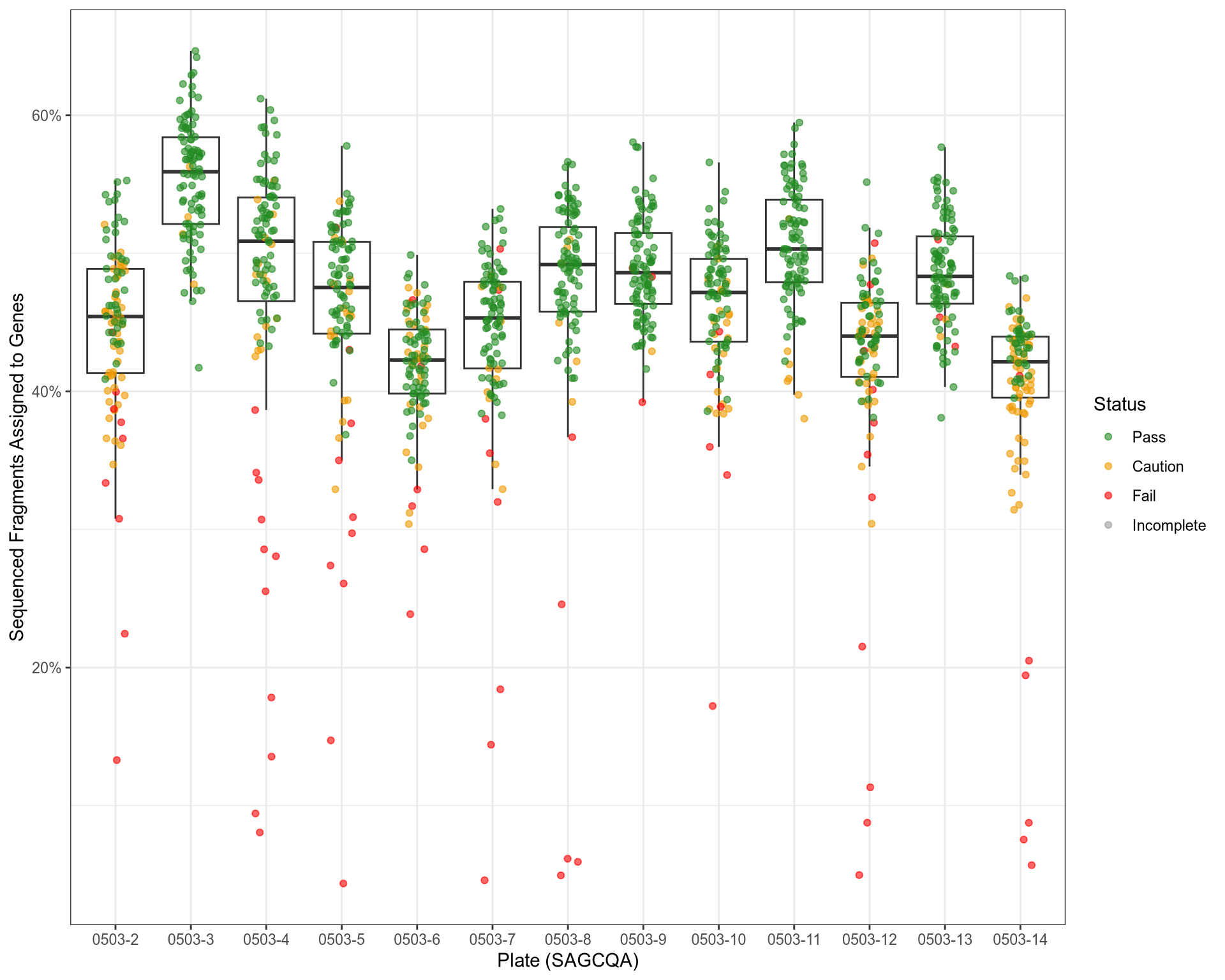
gene_assigned_rate salmon num_frags_with_concordant_consistent_mappings / sequenced_fragments
decoy_aligned_rate salmon num_decoy_fragments / sequenced_fragments
median_insert_size samtools stats Calculated by only taking alignments which are concordantly paired
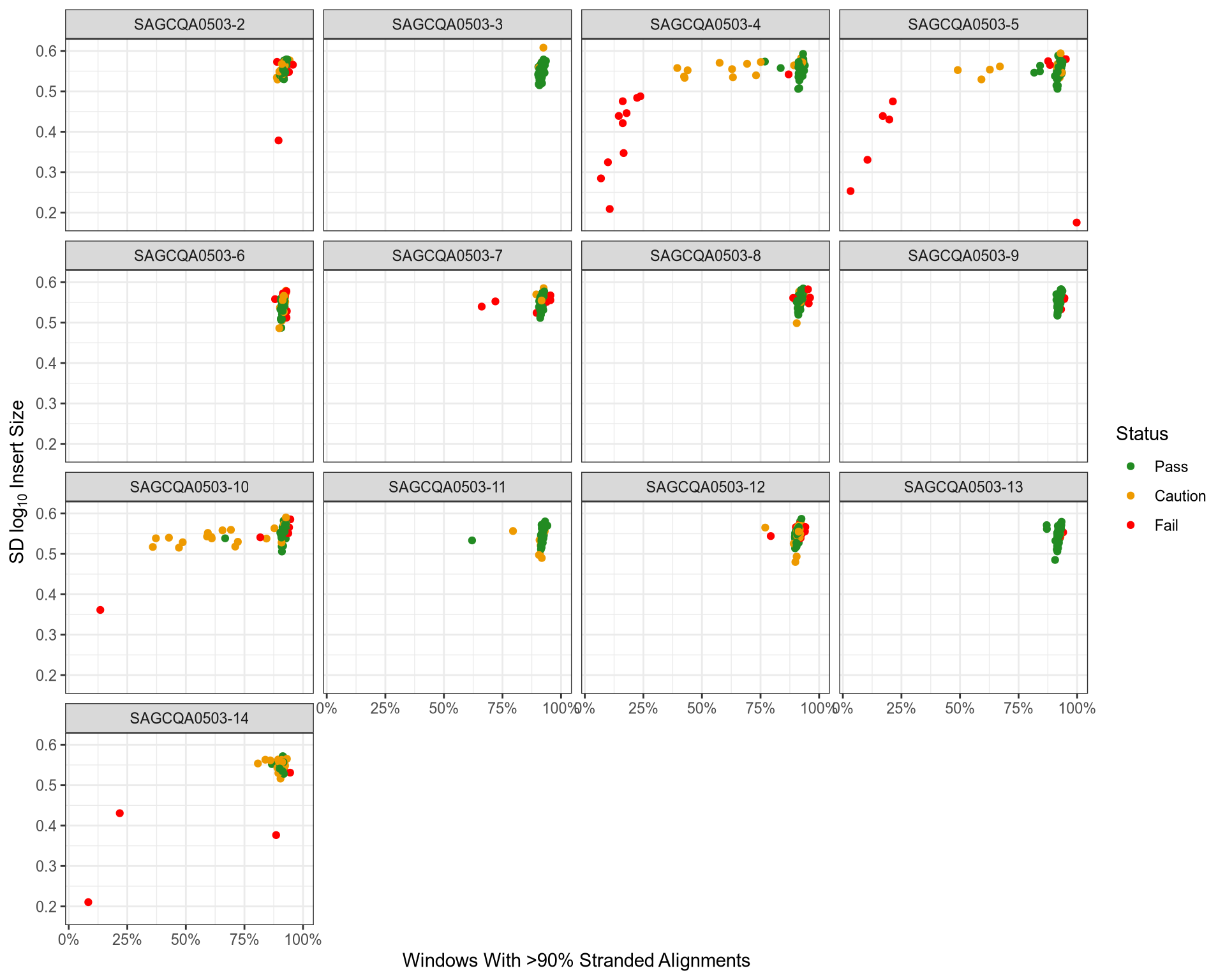
sd_log10_insert_size samtools stats Calculated by only taking alignments which are concordantly paired, the transforming the insert size using log10 and finding the standard deviation
median_tin nf-core The median TIN score across all measured trancripts
prop_no_feature featureCounts The proportion of input reads which aligned where there was no annotated feature
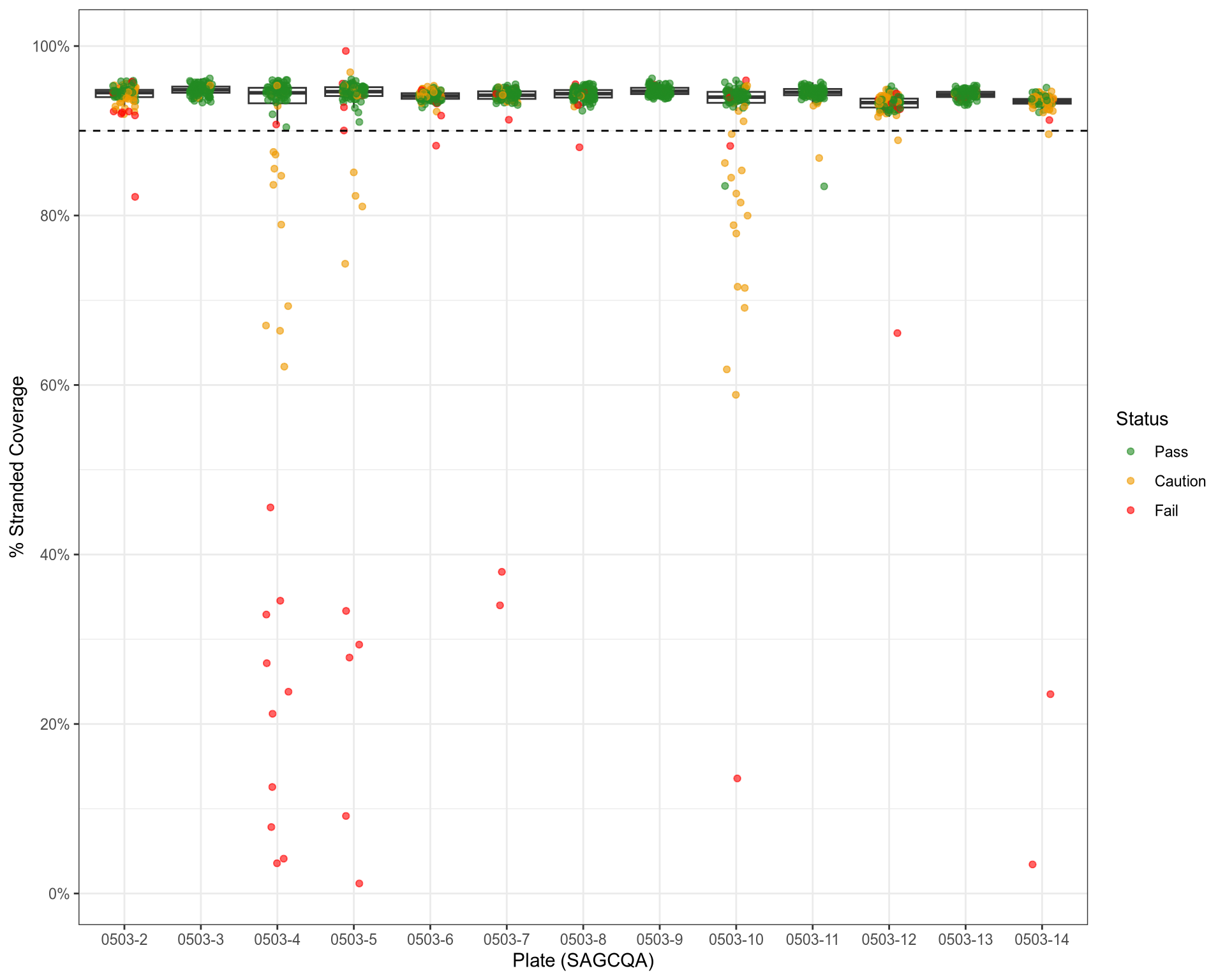
stranded_coverage strandcheckR The proportion of windows showing >90% of reads with a stranded bias, weighted by coverage
prop_assigned featureCounts / salmon The proportion of sequenced fragments assigned to a gene/transcript

QC: Duplication Rates

QC: rRNA Content
QC: Strandedness of Alignments
QC: Strandedness Vs Insert Size Variability
QC: % Of Sequenced Reads Assigned to Genes
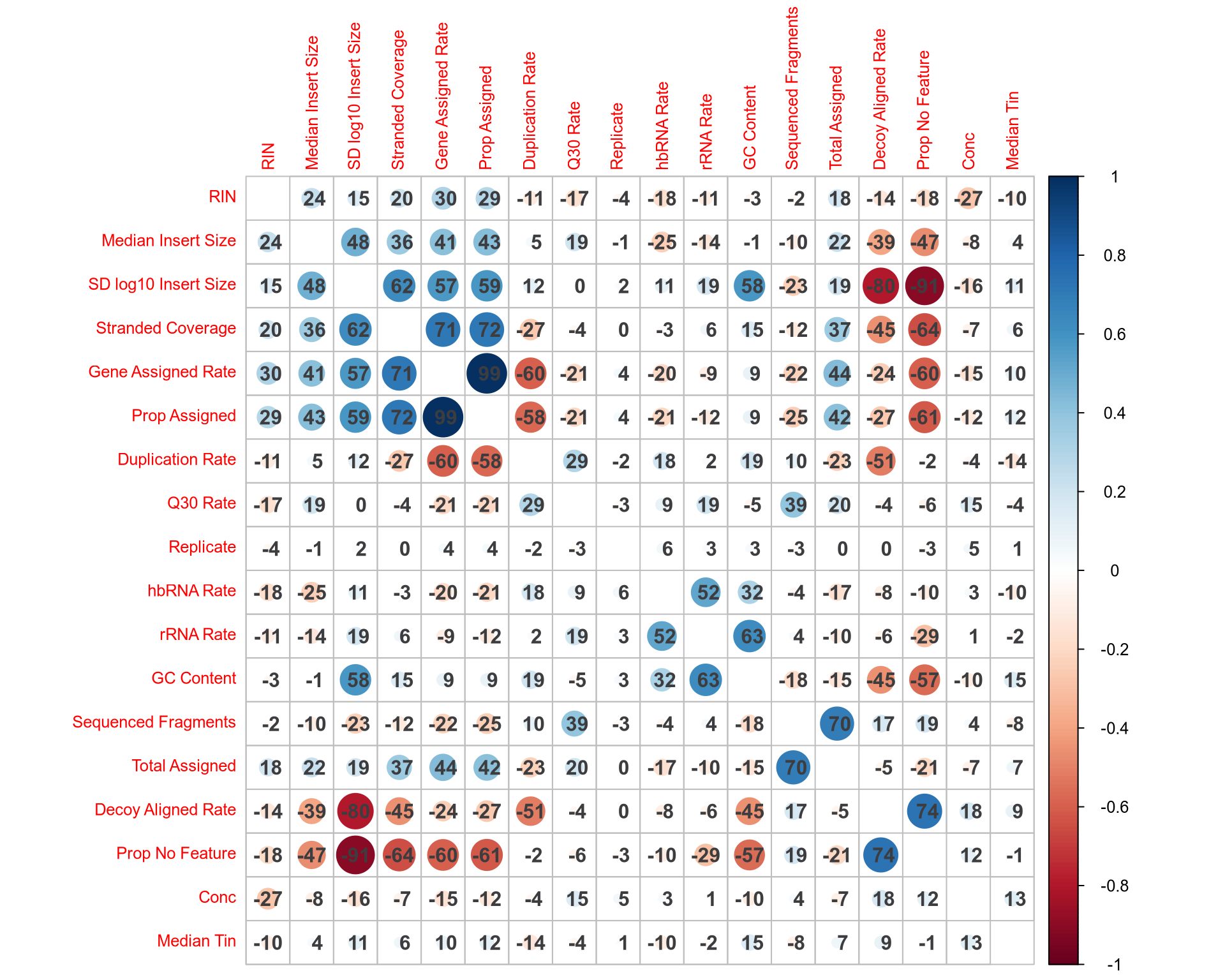
Similarity of QC Metrics
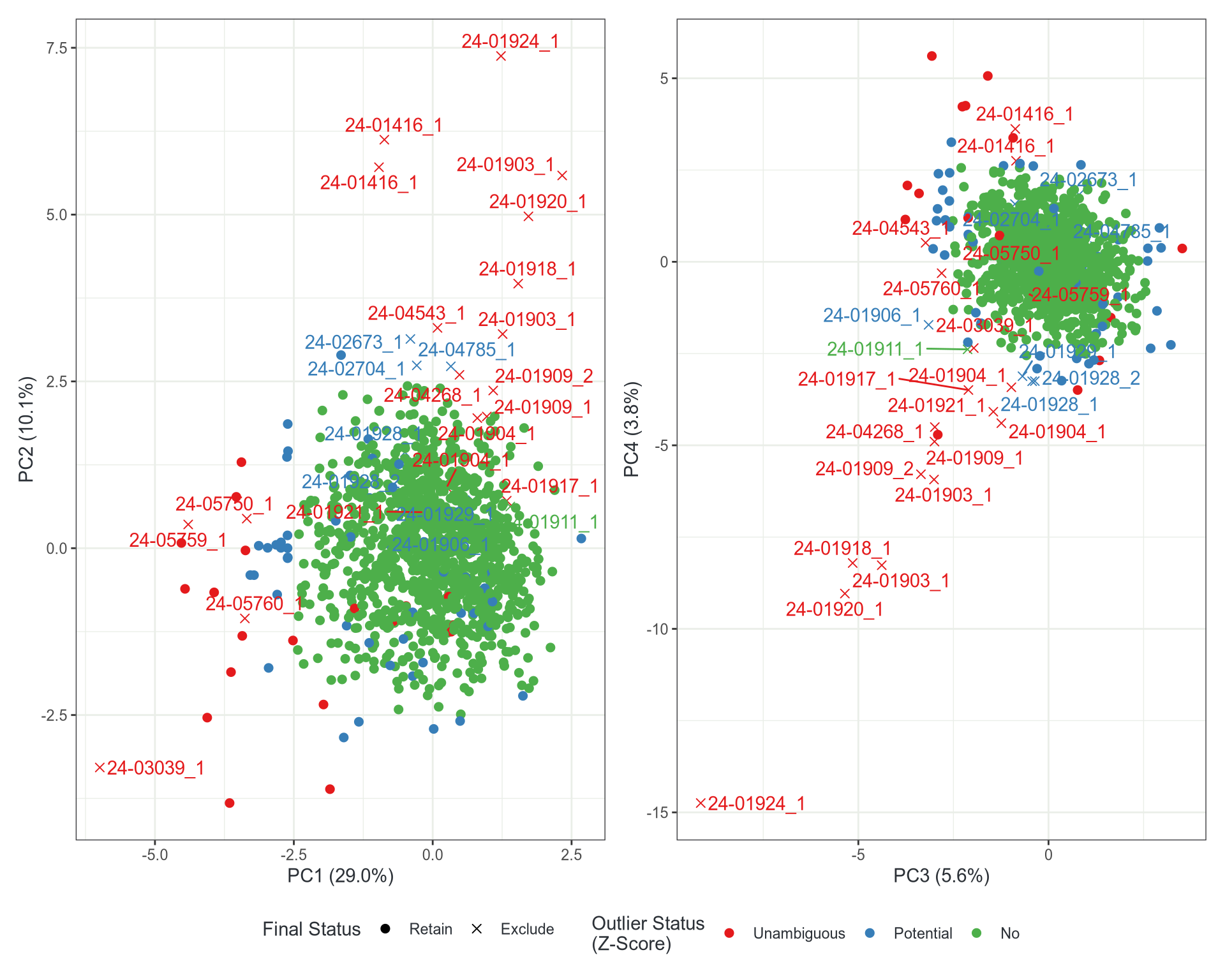
Outlier Detection
  1. Run PCA
  2. Find Robust Z-scores for PC1-4
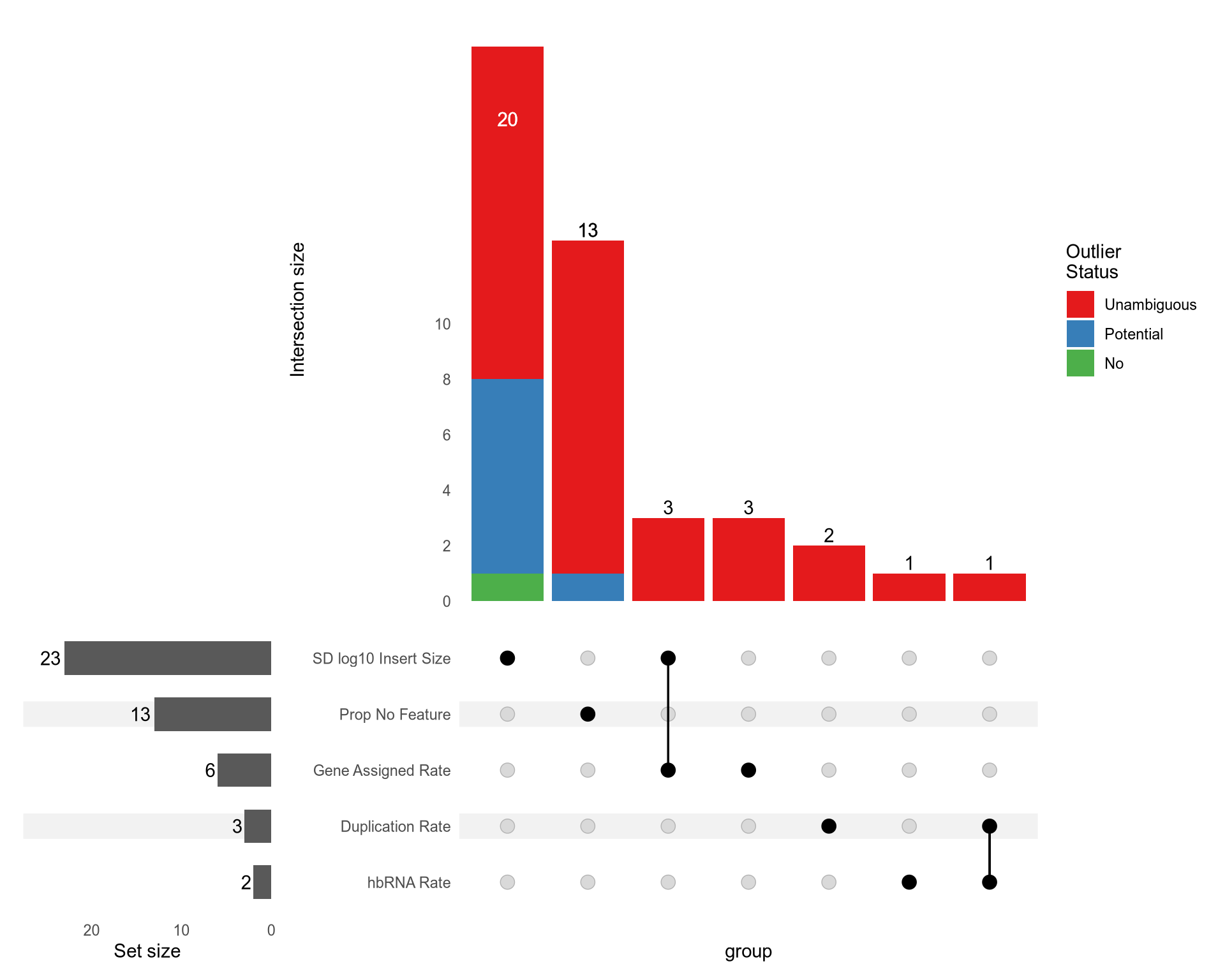
  3. Label as “No”, “Potential” or “Unambiguous” Outlier
    • |Z| > 1/200 (2.5758) or |Z| > 1/2000 (3.2905)
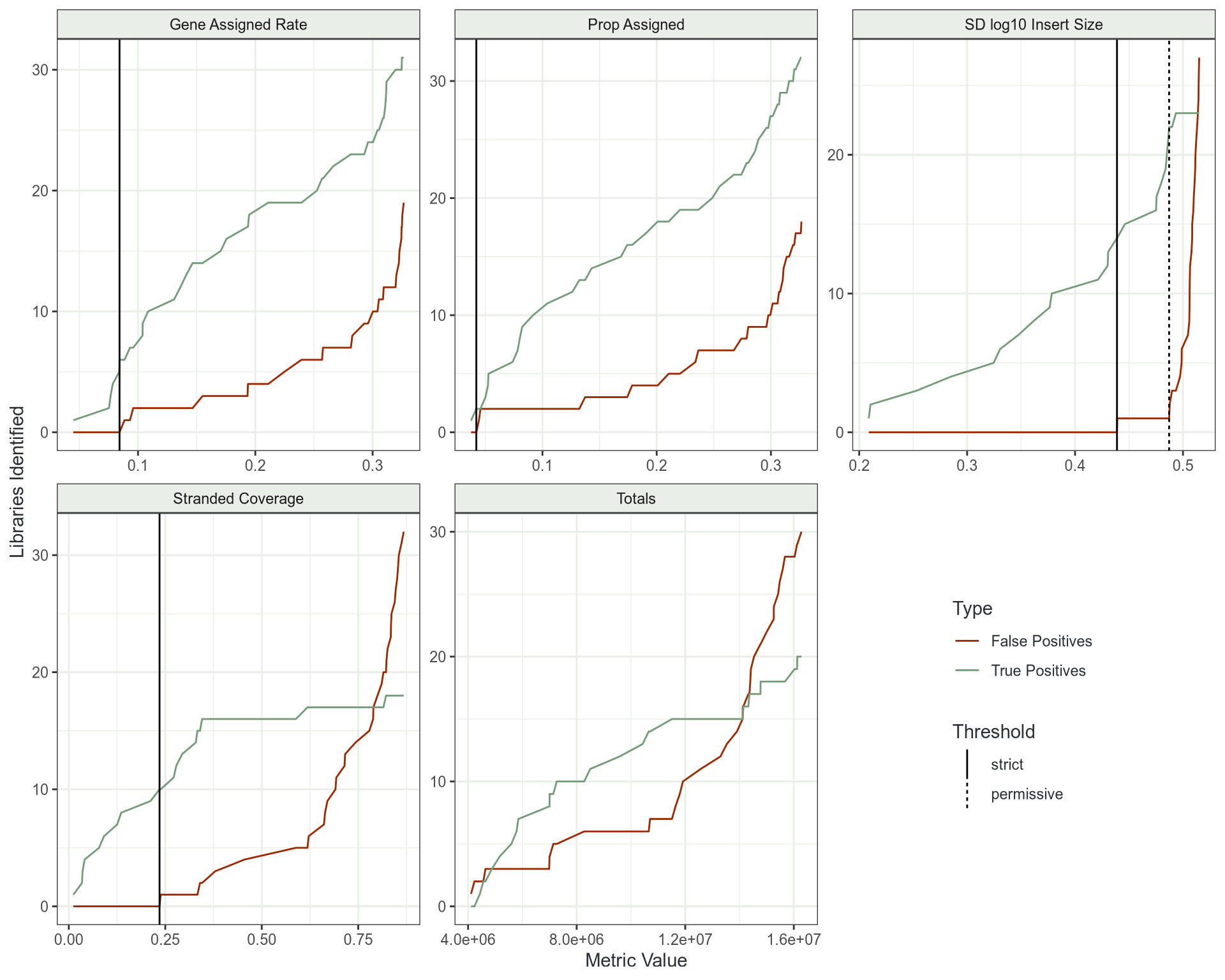
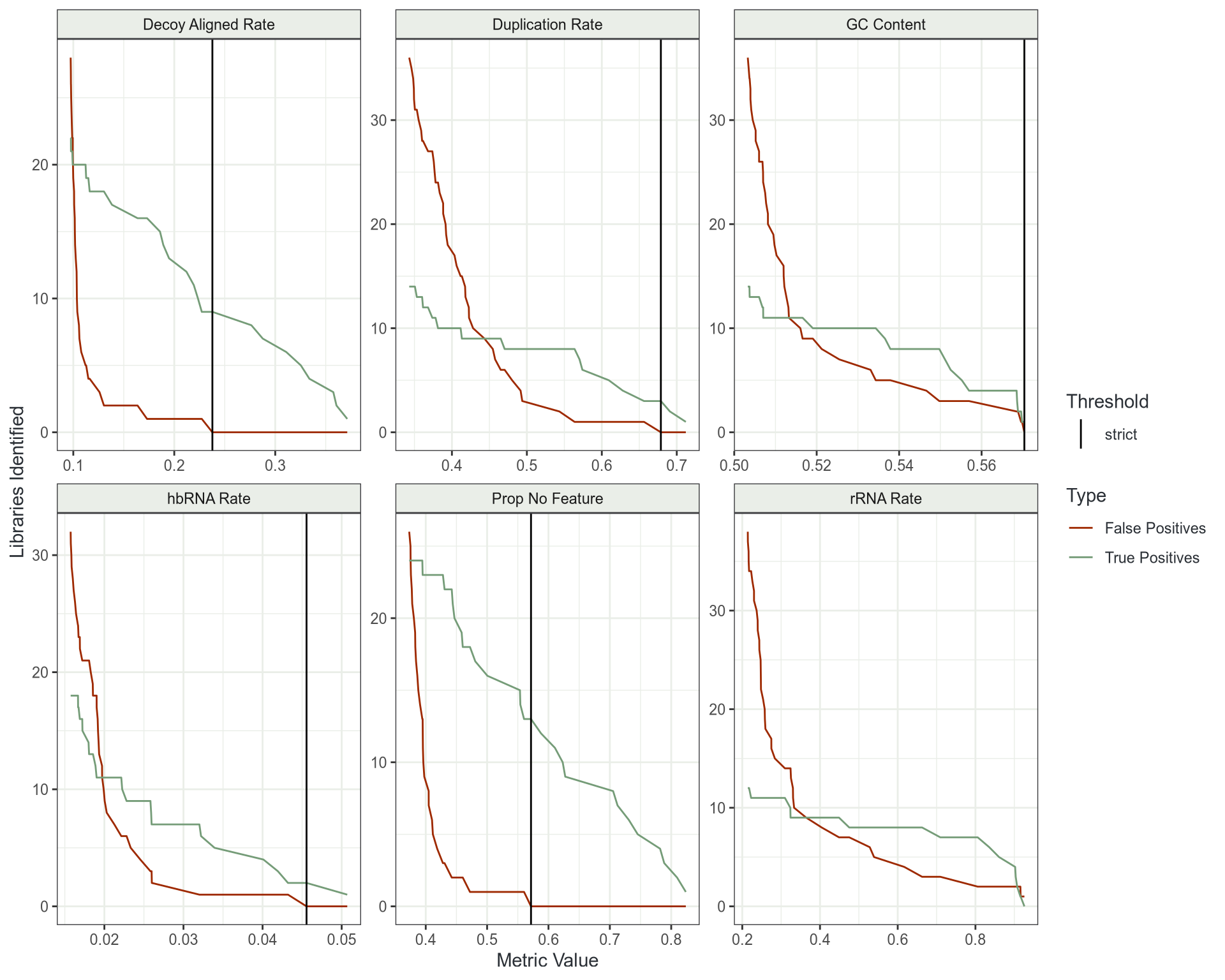
  4. Find which QC metrics have outlier threshold

Outlier Detection

Outliers at low values

Outliers at high values

Outlier Detection

Outlier Detection
Normalisation

  • Didn’t need them anyway 😅

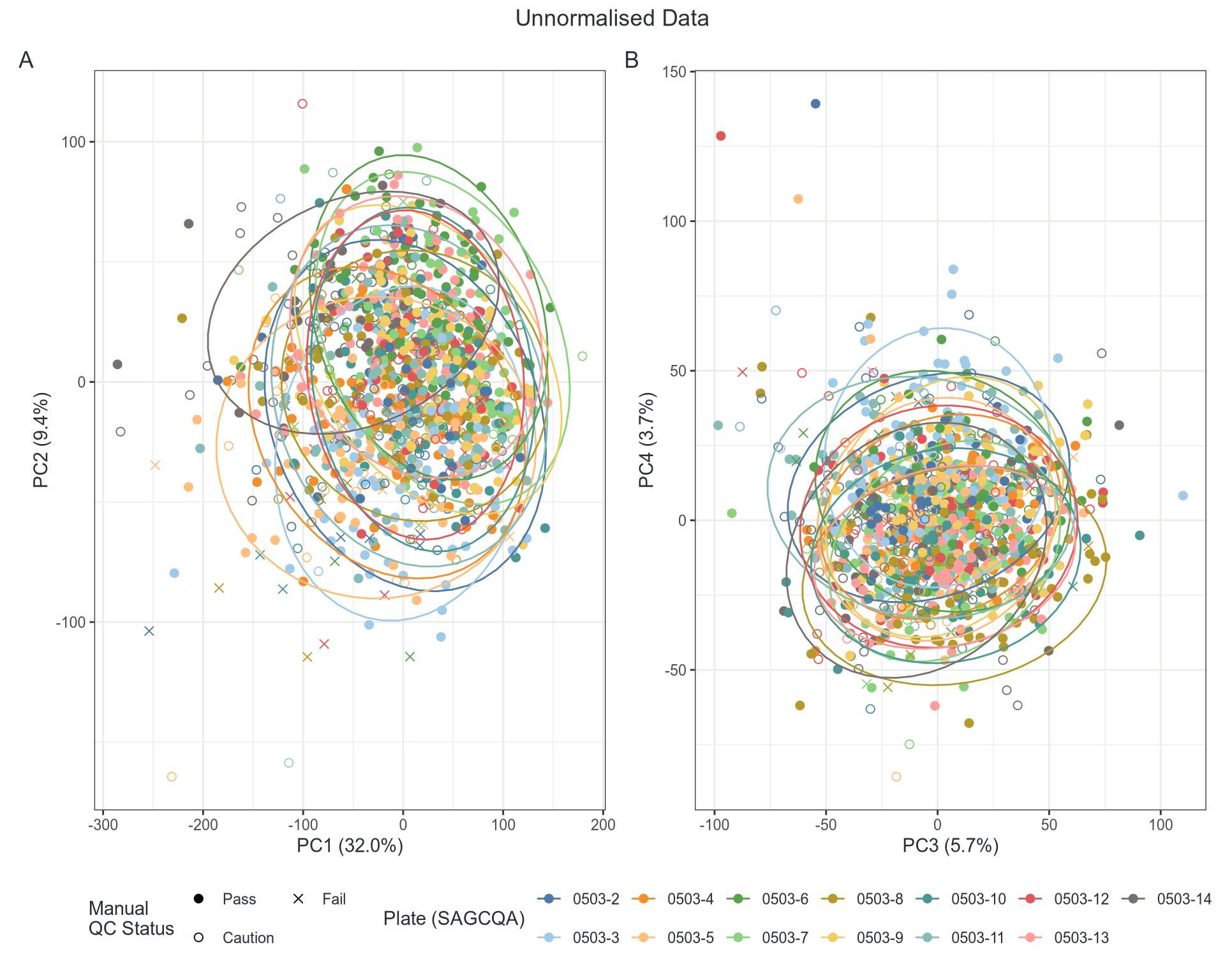
Batch Effects

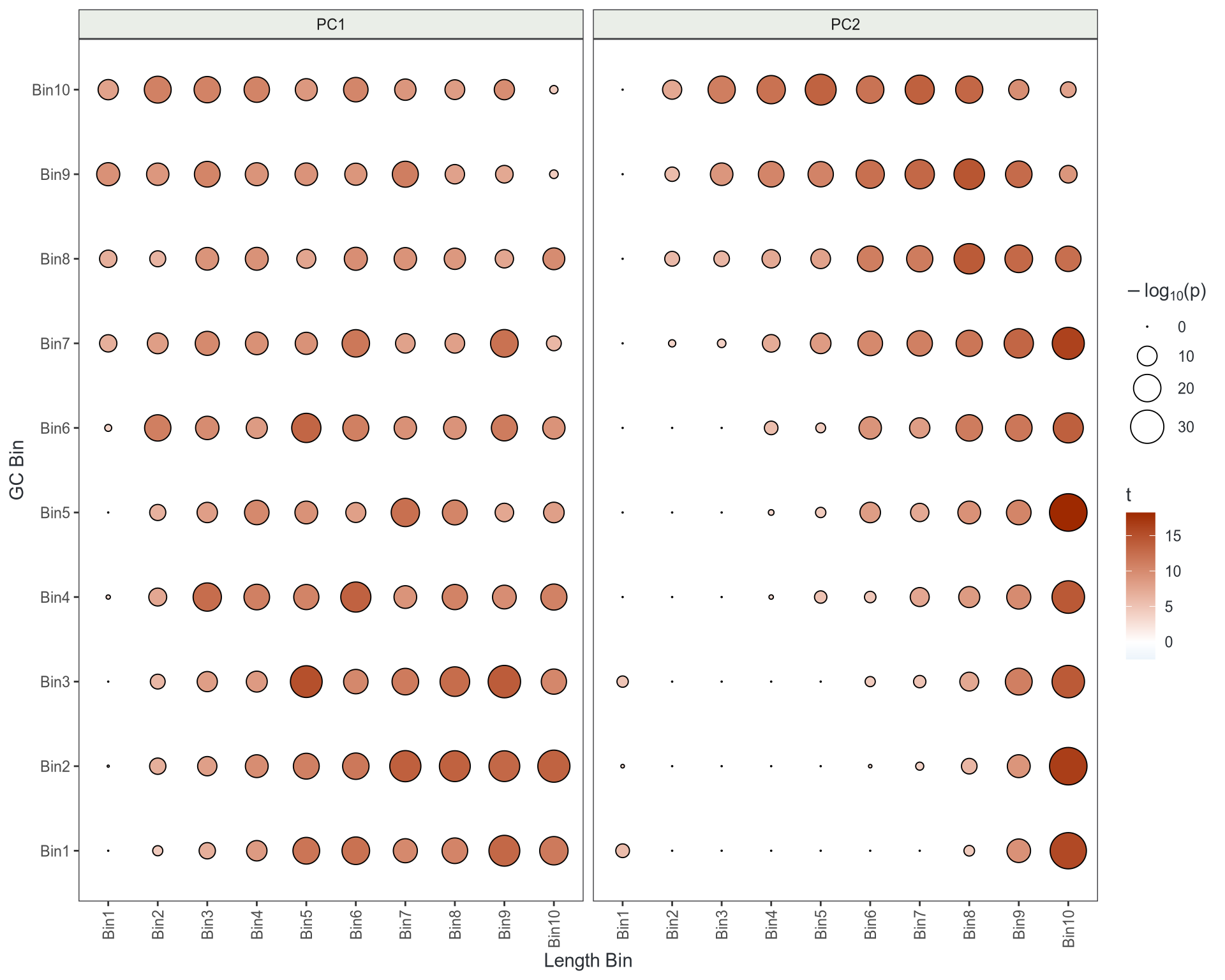
GC & Length Artefacts

  • Method developed by Lachlan Baer
  • Bin gene-level rotations from PCA by GC & Length
  • Perform \(t\)-test in each bin
  • If no bias \(\implies\) random noise
  • Looks like GC & length is impacting signal

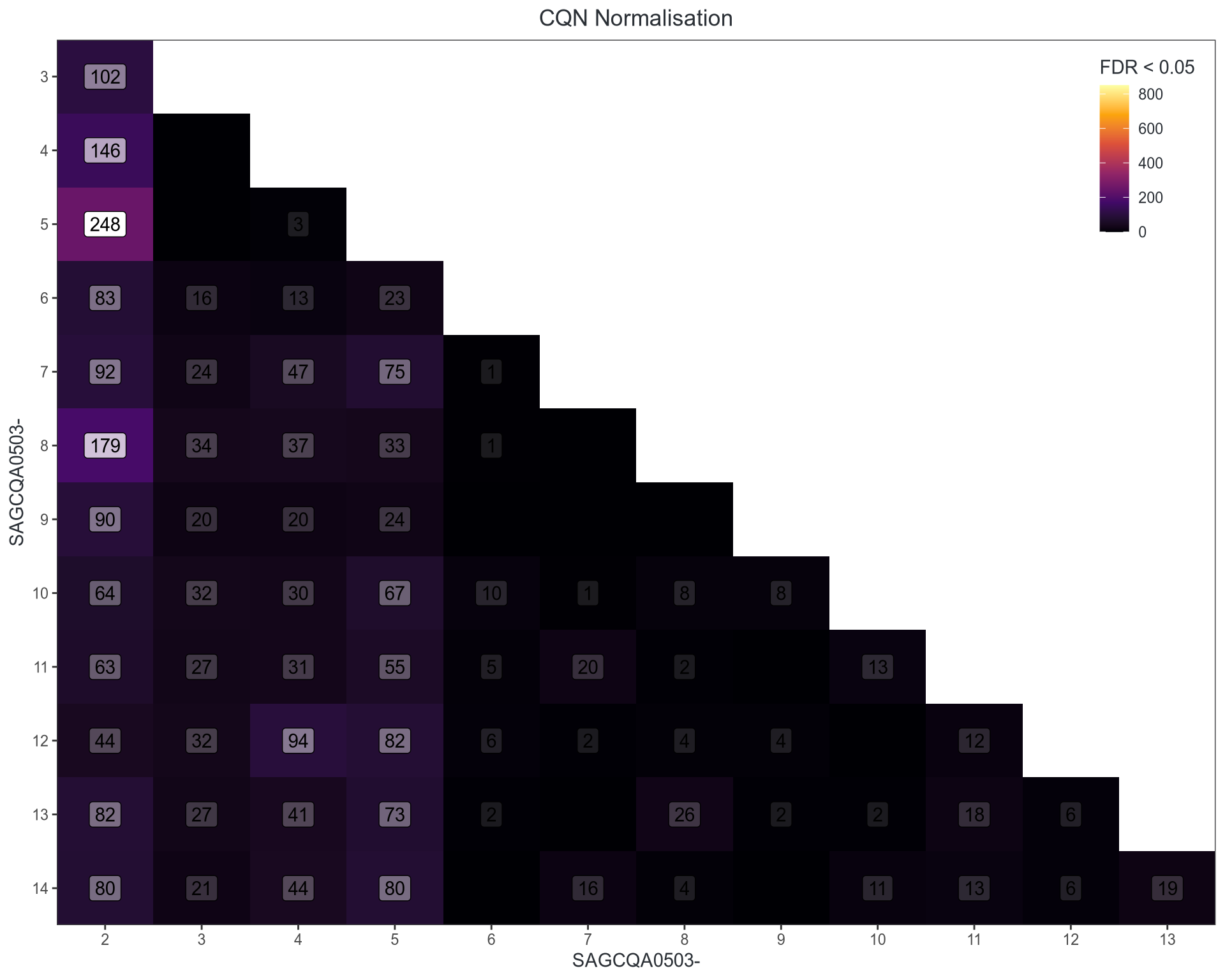
Conditional Quantile Normalisation
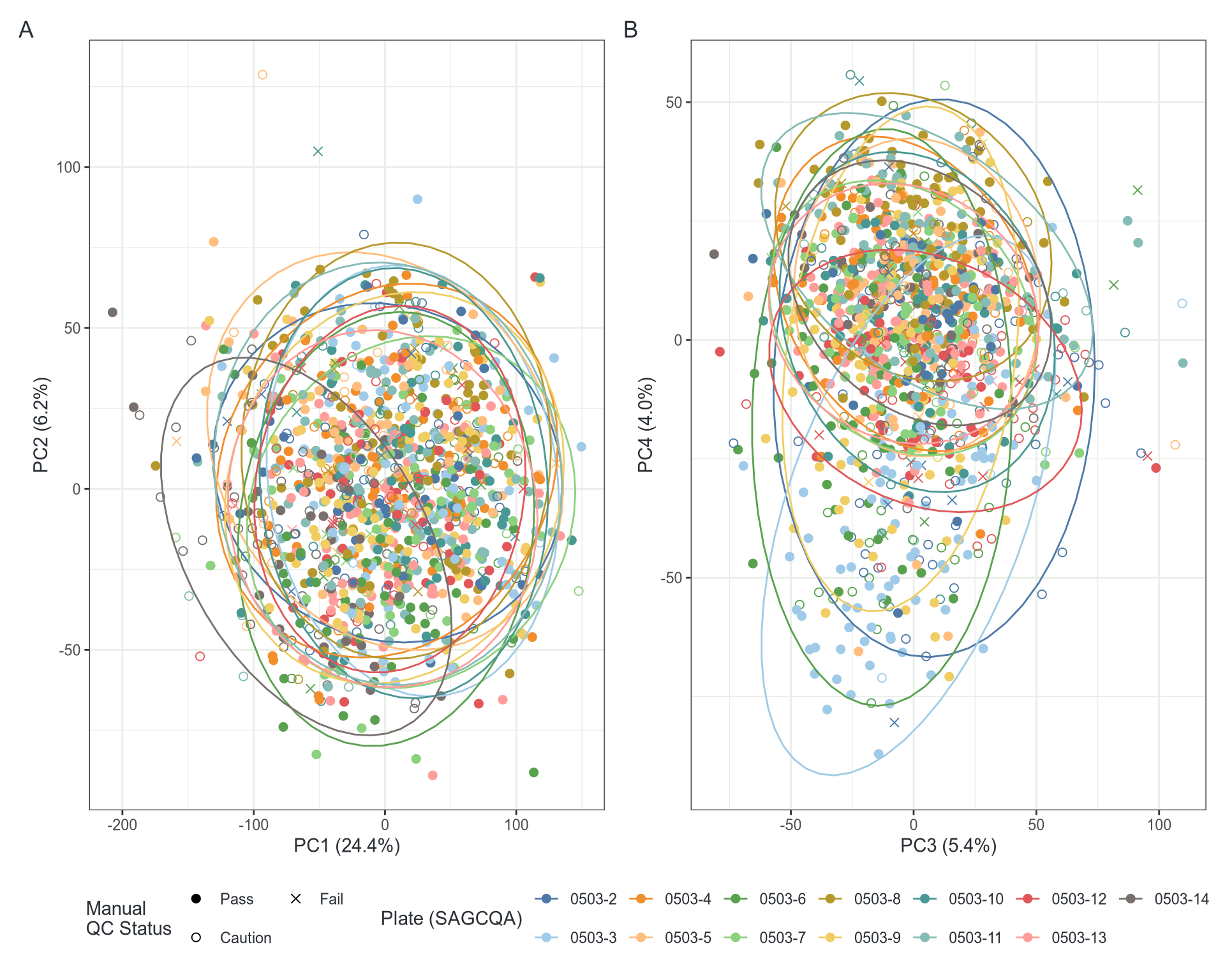
PC4 captures age 🎉

Performance on Pools
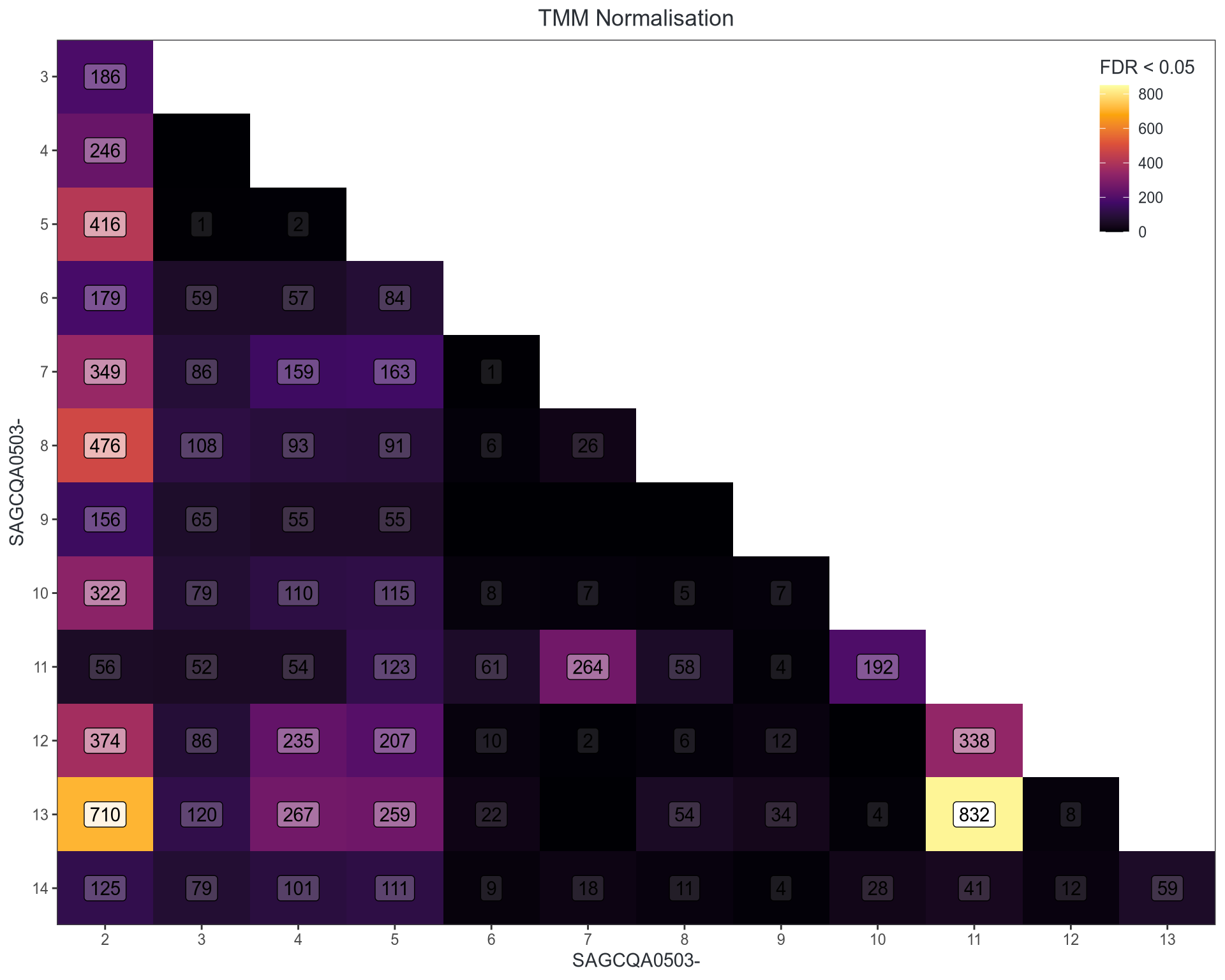
Both improve further using glmTreat() at FC > 1.1

Do Any QC Metrics Impact Signal
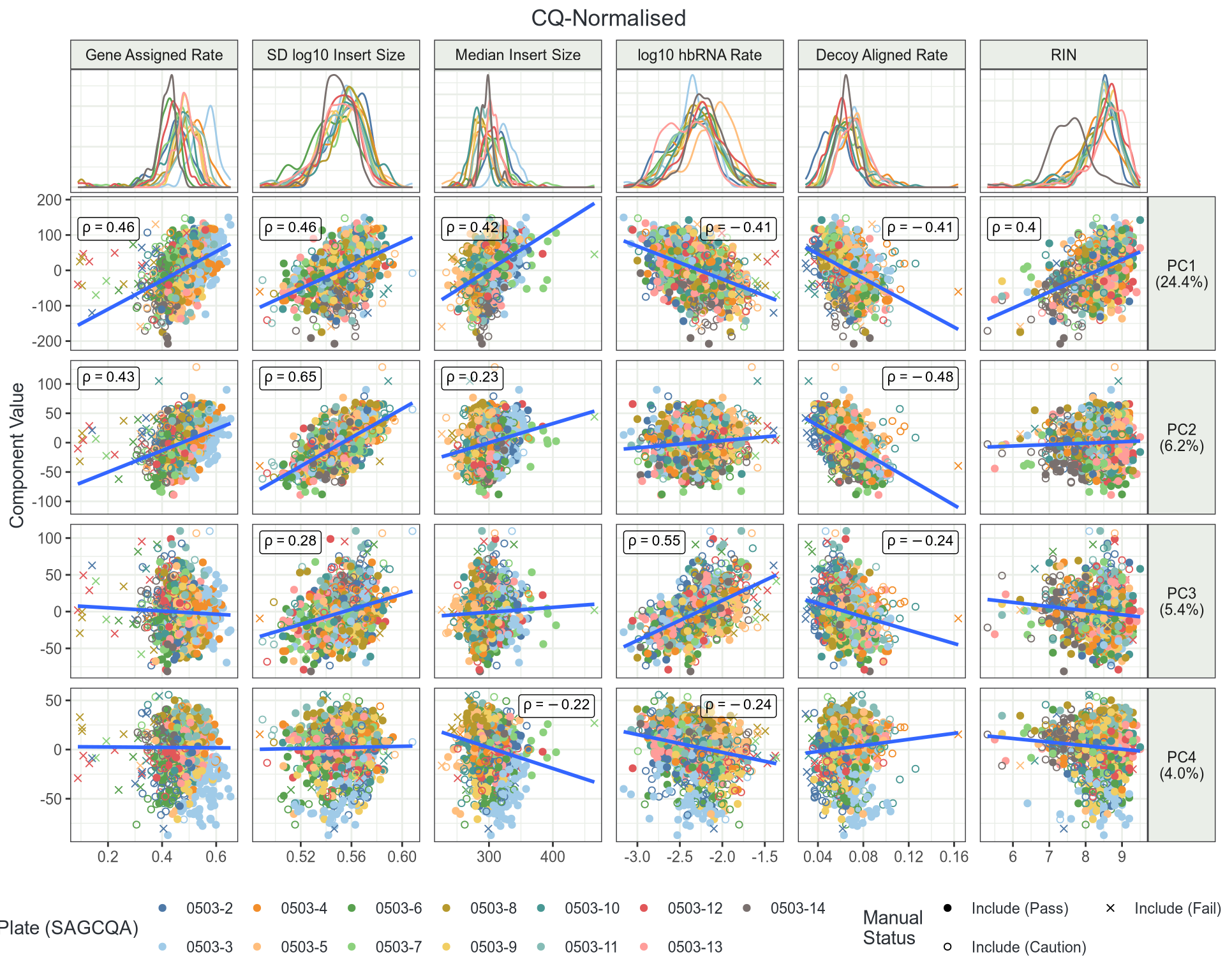
  • Several QC metrics strongly correlate with PC1-3
  • How will this impact DGE analysis?
  • Can I check?

Using QC Metrics As Predictors

Managing Noise

  • Strategy is to fit a null (intercept-only) model
    • Add QC metrics to find which improve fit
      \(\implies\) becomes baseline model for all DGE analysis
    • Identify best combination of metrics
  • gDNA-related metrics (QC PC1)
    • stranded_coverage, prop_no_feature, sd_log10_insert_size, decoy_aligned_rate, gene_assigned_rate
  • Library composition metrics (QC PC2)
    • hbrna_rate, rrna_rate, gc_content, duplication_rate
  • Also tried RIN

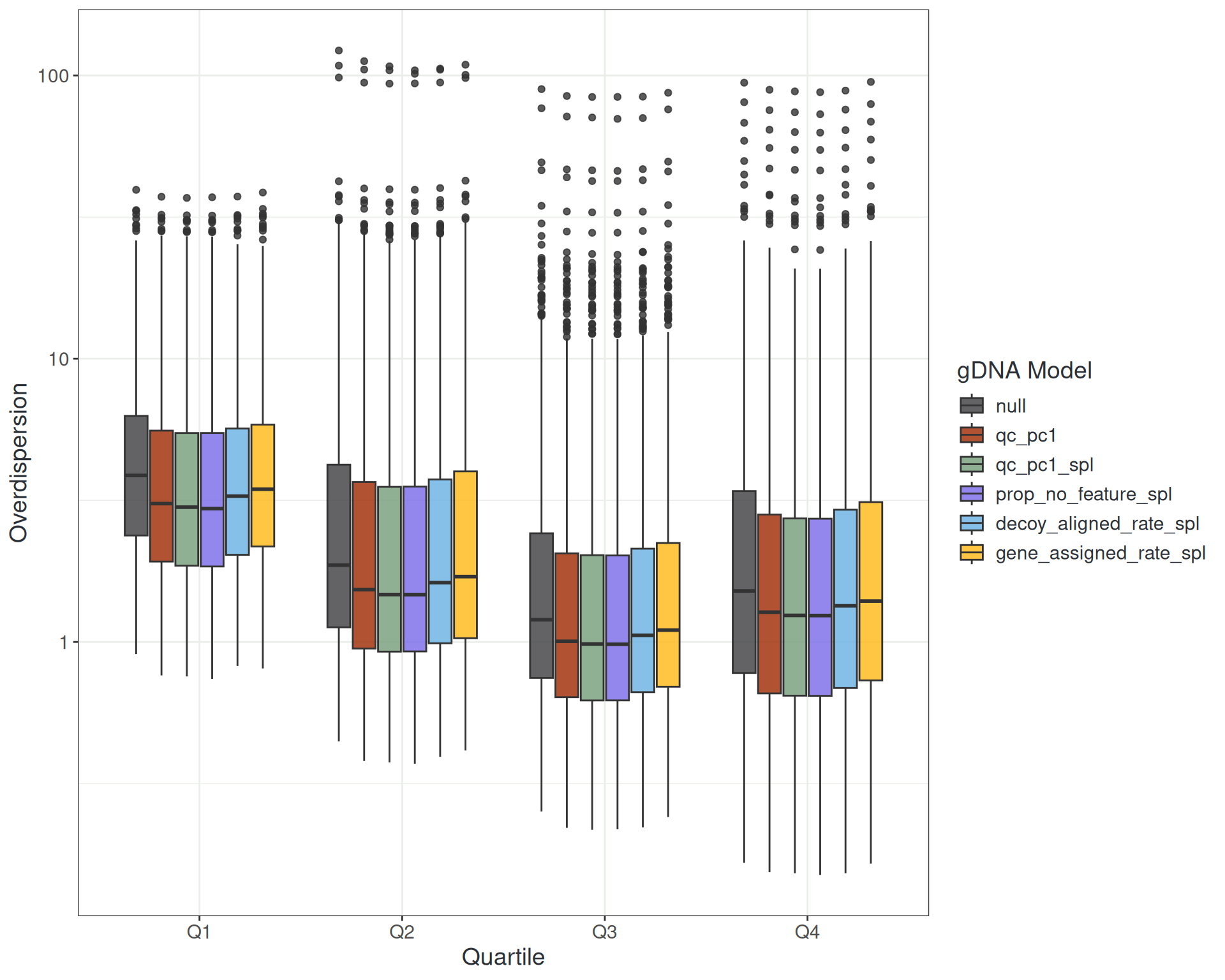
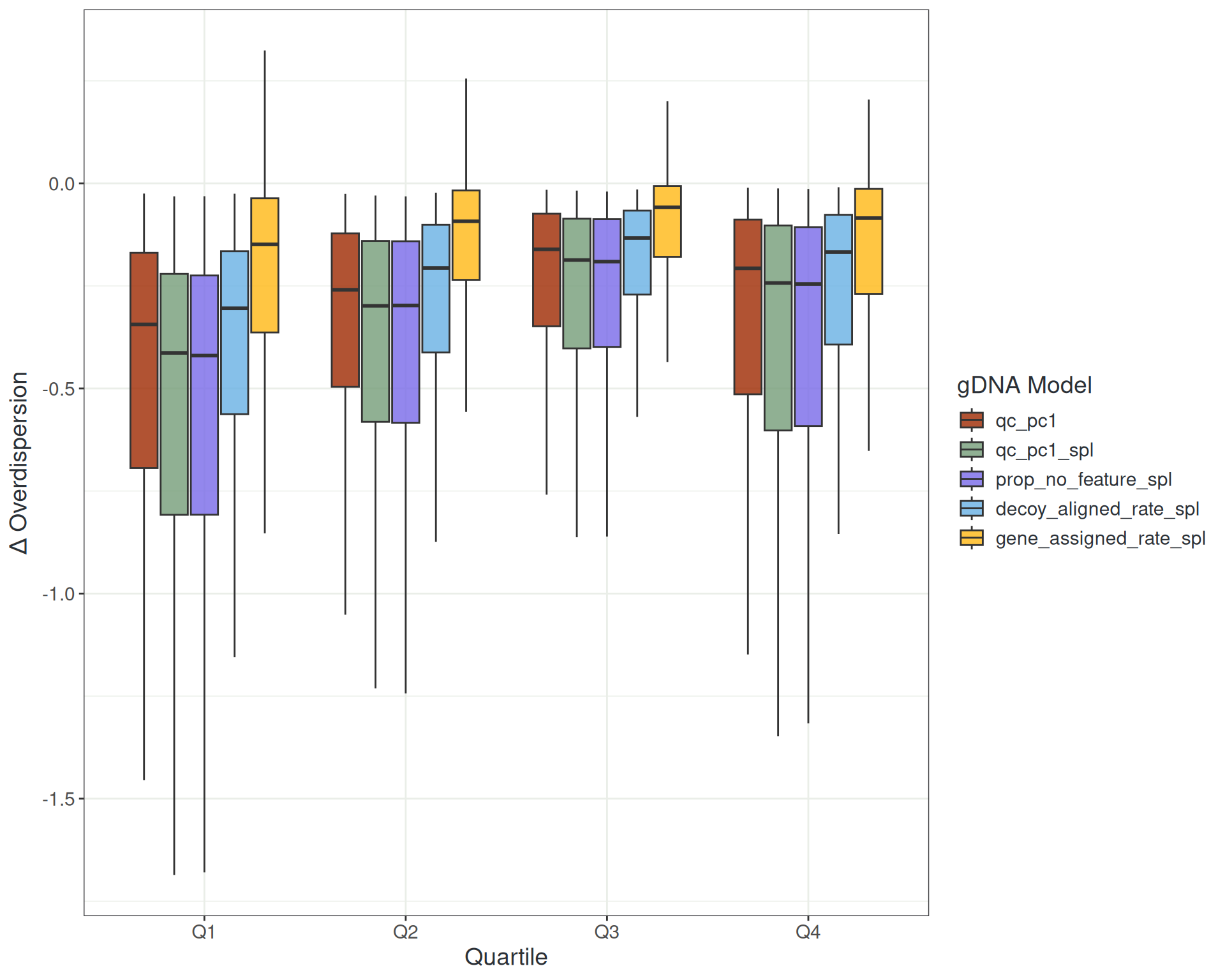
Managing Noise: gDNA Metrics

Lower Dispersions \(\implies\) better fit

Differences from intercept-only

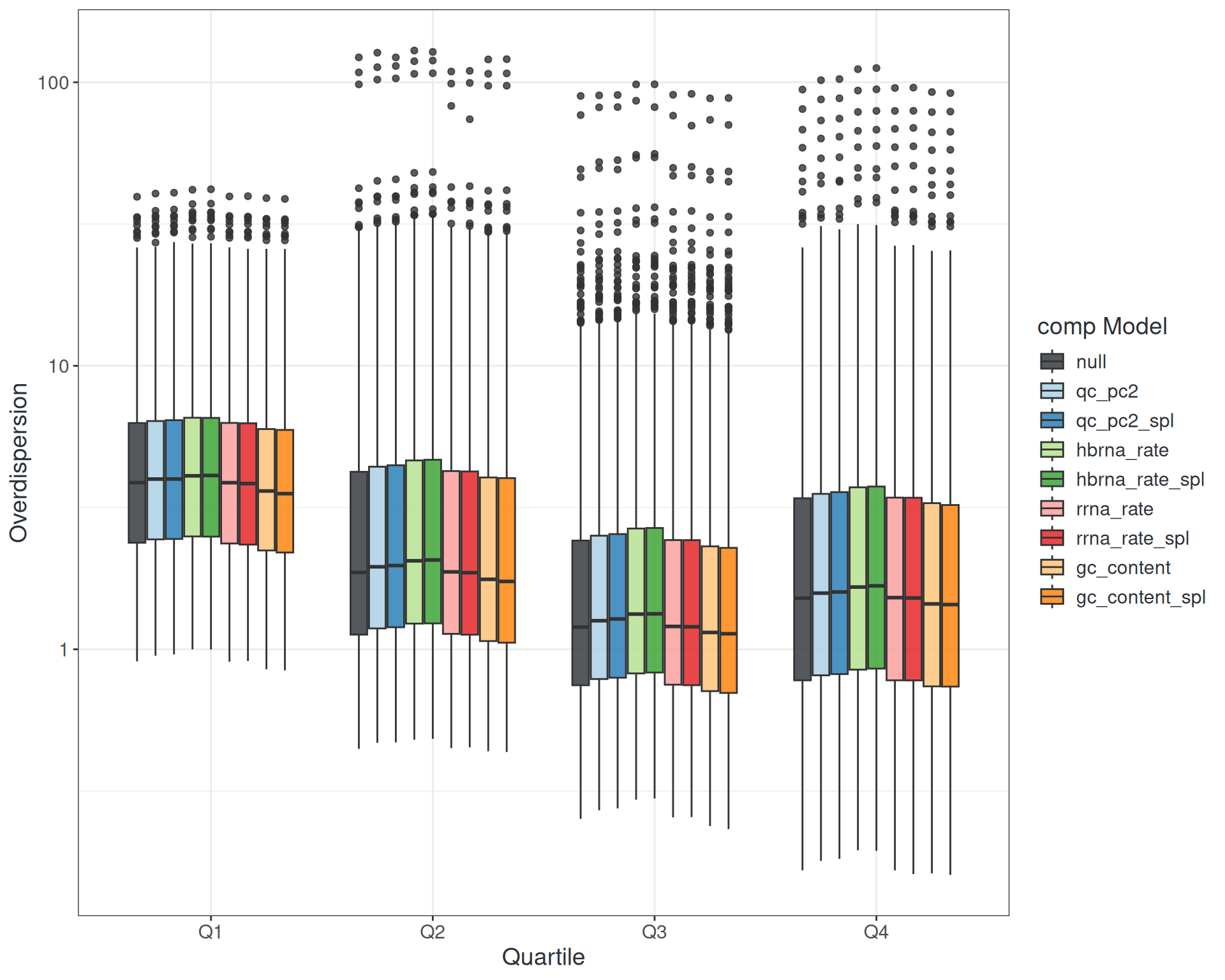
Managing Noise: Library Composition
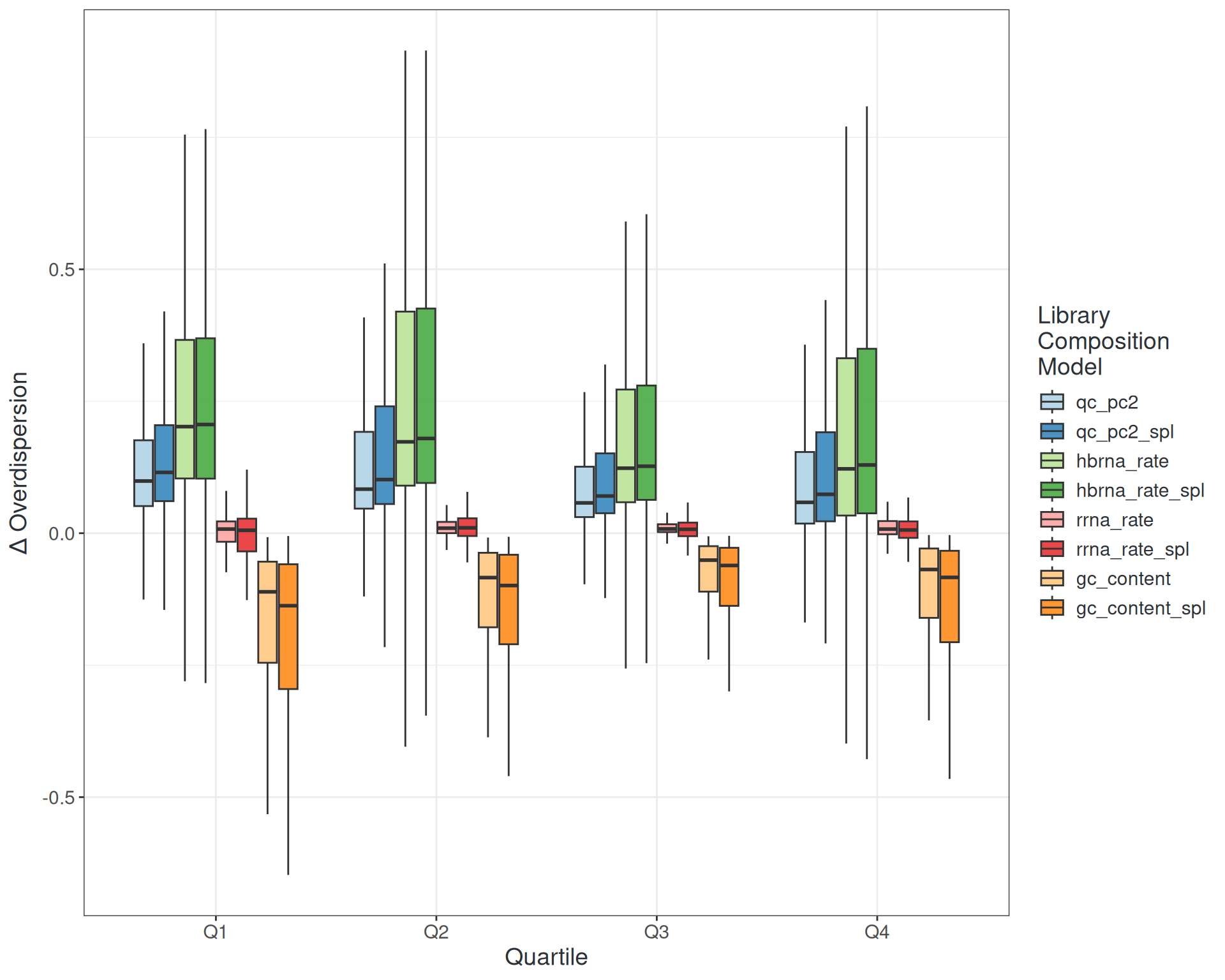
Lower Dispersions \(\implies\) better fit

Differences from intercept-only

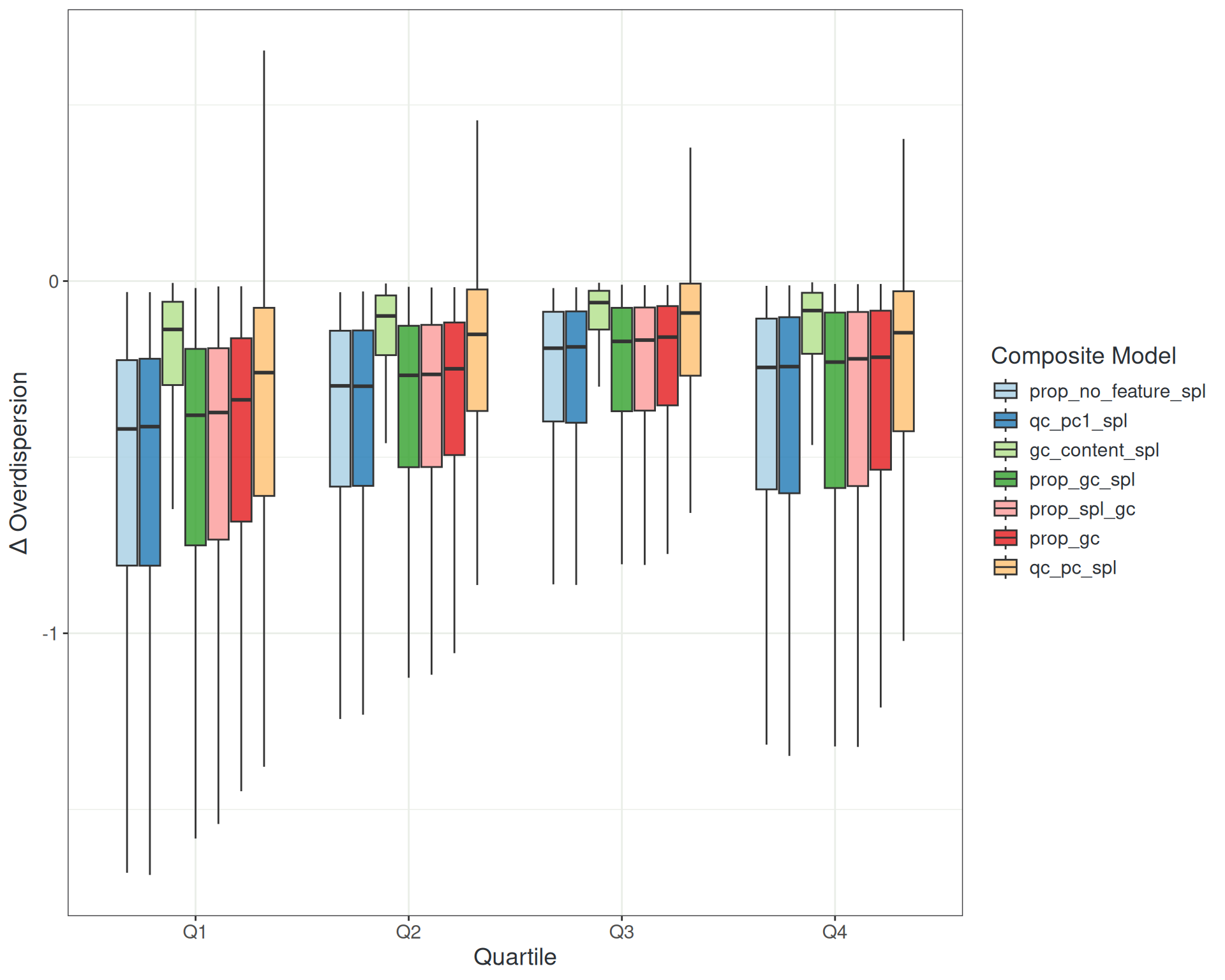
Managing Noise: Combined Metrics

Lower Dispersions \(\implies\) better fit
  • No combination outperformed prop_no_feature as a natural spline
    • Each predictor costs degrees of freedom
  • Have also tested age as a predictor
    • Natural spline is better than linear
  • PC1 from genotype data improves about 30% of genes

Take Home

  • Unlike any dataset I’ve ever worked with
  • The gDNA aspect reinforces Hien To’s work on strandcheckR
    • Would love to see it added to nf-core
  • Setting all data handling early is great
    • Unexpected challenges incorporating mixups
    • Typos in sample sheets can be infuriating (e.g. Pool vs pool)
  • Didn’t see any clinical variables for >2yrs
    • T2D: 000’s of DE Genes
    • CKD: 000’s of DE Genes
    • CHD is a really difficult phenotype

Clickbait Time

Is large cohort transcriptomics just scRNA without the zero counts?

Stevie speaks the truth

The questions are completely different:

  • We want clusters of genes defining disease pathology with age + complication, NOT clusters of cells
  • QC represents fundamentally different technical processes

Acknowledgements

Black Ochre Data Labs

Alex Brown

Jimmy Breen

Alastair Ludington

Sam Buckberry

Liza Kretzschmar

Yassine Souilmi

Katharine Brown

Rose Senesi

Sam Godwin

Rebecca Simpson


Adam Heterick

Kaashifah Bruce

Bastien Llamas

Amanda Richards-Satour

Justine Clark

Holly Massacci

Sarah Munns

Alli Foster

Sehaj Dhariwal

SAGC

Sen Wang

Renee Smith

John Salamon

Paul Wang

Baker Heart & Diabetes Institute

Sam El Osta

Ishant Kurma

Moshe Olshansky

Scott Maxwell

SAHMRI / Wardliparingga

Natasha Howard

Victor Chang Cardiac Research Institute

Jason Kovacic

University of Sydney

Jean Yang

Centre For Population Genomics

Dan MacArthur

References

Hansen, Kasper D, Rafael A Irizarry, and Zhijin Wu. 2012. “Removing Technical Variability in RNA-Seq Data Using Conditional Quantile Normalization.” Biostatistics 13 (2): 204–16.
Kim, Taiyun, Owen Tang, Stephen T Vernon, Katharine A Kott, Yen Chin Koay, John Park, David E James, et al. 2021. “A Hierarchical Approach to Removal of Unwanted Variation for Large-Scale Metabolomics Data.” Nat. Commun. 12 (1): 4992.
Risso, Davide, John Ngai, Terence P Speed, and Sandrine Dudoit. 2014. “Normalization of RNA-Seq Data Using Factor Analysis of Control Genes or Samples.” Nat. Biotechnol. 32 (9): 896–902.
Robinson, Mark D, and Alicia Oshlack. 2010. “A Scaling Normalization Method for Differential Expression Analysis of RNA-Seq Data.” Genome Biol. 11 (3): R25.
Salim, Agus, Ramyar Molania, Jianan Wang, Alysha De Livera, Rachel Thijssen, and Terence P Speed. 2022. RUV-III-NB: Normalization of Single Cell RNA-Seq Data.” Nucleic Acids Res. 50 (16): e96.
To, Thu-Hien, and Stephen Pederson. 2019. strandCheckR: An R Package for Quantifying and Removing Double Strand Sequences for Strand-Specific RNA-Seq.” J. Open Source Softw. 4 (34): 1145.